
[David] Alice, good to have you here as always. Love your comments when you’re talking about the markets, We missed you last week, but it was a recess, as appropriate. You could be gone during that time. You’ll be hosting the podcast next week ’cause I’ll be gone. But what about legislative updates? What are thinking for starting with the MBA’s report? I thought the road to housing is overall, there, again, it’s the government trying to fix something they don’t totally fully understand.
[Alice] Yeah, so it’s the two bills that we’ve talked about on the show several times. And so in the MBA’s piece, what they’re want everyone to do is go to the Mortgage Action Alliance page- which I just did. While you listen to Adam’s bit, you can just- Do MBA M- Mortgage Action Alliance. Go, put that in your search engine. The page will come up, and you just click the button that says Take Action. And what’s there is just a place for you to see the four prompts that Adam talked about that are really seriously wrong with these bills and have to get fixed. And they’re worded very concisely. And what happens is then you just put in your name and basic information. It’s super simple, and the body of the email is already filled in for you to explain these four things very concisely. If you want to go add, edit, you can, but it’s super, super easy. And these do matter. It does matter the more m- messages that Congressm- our Congress people s- receive from our industry. It does matter. So please take a minute. MBA, Mortgage Action Alliance, take action, and this will encourage our representatives to fix these four things that are wrong with the bill. In particular, one’s like a typo. Yeah. And if you ever wondered the value of the MBA and the Mortgage Collaborative and having people’s voices in Washington who pay attention to this stuff right when it’s published and make sure that we have a unified voice and learn from each other these are times when this really reflects how valuable that is. Really critical, yeah. So please take a couple minutes to do that. I was just gonna talk very briefly, a little more in the weeds, because we were talking before the show, Dave, on how you ran into somebody, and they mentioned how valuable the information is for anyone. You don’t have to be in the mortgage industry to really get a lot out of the show. Freddie Mac just published a memo that made some changes in income calculations and a few other qualifying criteria that I think are really a struggle for loan officers today. I would say that the tougher the market, it seems like the more the the tougher the loans are As you said, we’re getting into the spring market, so things seem to open up a little bit. But we have a large percentage of borrowers who are using income, you might find this hard to believe, but they’re using income that they’re not gonna get until after closing. When we have to do pre-closing verification and the borrower’s telling us, “But I’m getting a raise a month after closing,” or, “I’m getting a new job that doesn’t- my first paycheck doesn’t come in until 15 or two, three weeks after closing,” we have issues that we have to work through in order to to have proper documentation in advance, and then after the loan closes, we’re still getting documentation to prove that they’ve gotten the income. So Freddie Mac’s memo that came out on March 6th eased up a little bit on this. They are now when you look at some areas of this, they are a little easier than Fannie. You now most importantly don’t have to have the reserves in the bank should the borrower isn’t getting- Yes, that was a big one the new paycheck, yeah, for two months. Yeah. Then you don’t have to verify that they have the res- those extra reserves to fall back on. So that was a big one. The other one is the property tax abatements and exemptions. We would run into this very often where, especially for service members in particular states, there’s several states like Maryland, for example, where, you know, if you’re a disabled vet, you don’t have to pay your property taxes. It can, you don’t have to, you’re exempt from that. So you, it takes a bit to get the paperwork filed that might not be in place at the time of closing. And it is something that we can factor in qualifying to have that reduced tax, property tax amount in the borrower’s qualifying. So for those of you who are listening who are just regular borrowers, don’t live this every day, income is our number one reason for repurchases. And so- Yes … if the lender is asking for a lot of paperwork, it’s because repurchases can put us out of business and we just gotta make sure we get this right. So it was good to see a little bit of relief. Fannie and Freddie are different on those two topics now, but a little bit in the weeds, but hopefully consumers can understand if you’re trying to do stuff like that, be prepared. We will need some extra paperwork. Yeah. Surprise. The mortgages need some extra pa- paperwork. Save your papers. We’ve been drowning in it forever. Electronically.
[David] Yeah, but let’s … and our, Alan isn’t with us today, but I wanna talk a little bit about your opinion, Alice, why we have not had more adoption of the e-signatures and some of the things that could help relieve on the paperwork so much. I’m in the process of selling a home. When it does finally sell and close, I’ll be here in Tennessee. It’s a Texas home. I’ll be able to sign electronically. I’ll be able to have everything done. I’d just be fuddled in this time where everyone’s trying to cut costs why it is you think more people aren’t doing this electronically.
[Alice] The companies I’ve been around lately have been very much electronic. If you’re referring to the remote online notarization, which we call fondly RUN and of course the differences between an e-note and an e-mortgage, a big chunk of that has to do with state laws that slow this down and county recordings that have to be addressed in order to make it nationally- feasible. I’m, I, a lot of the smaller companies have adopted it, so I would hope. A small comp- what? Yeah. Maybe it’s fear, but it’s super easy, except for that last mile. It- yeah.
[David] Yeah. It’s definitely that last mile. What, do you have any sense, Alice and then David, you, with the, of what the number of people that are truly gone to electronic mortgages where very little, the paperwork is been dramatically reduced? I’m shocked, as I was talking to several people, they’re going, ” We haven’t done that. We haven’t just felt comfortable. We’re so busy doing different things.” It’s surprising what seems to be, what I thought was being universally done is not necessarily. Alice, what are you seeing at the companies you are with?
[Alice] Do you- A lot might have to do with the title companies that they’re working with and the adoption there. Ah.
[Kittle] Yeah, you have to have, you gotta have the title company buy into it. But as an example this Thursday we’re gonna close on Gail’s home. And, we’re gonna be here in Kentucky. We’re not going to California for it. It’ll all be done electronically. We’ve handled the entire thing- for the last four weeks or whatever it is, and have done everything electronically. I can’t imagine having one of the three lending companies I had in this environment and not being as paperless as possible. It’s a surprise, but I don’t have an answer for that. Because if you’re looking at cutting cost, that’s the first- There’s there’s no better way … No, there’s no better way to do it. I know it may eliminate some jobs, but that’s just the way it is, it’s just so-
[David] I think it reallocates jobs. And so what I’m starting to think of when I c- when you talk about automation and l- AI, you look at the reallocation of jobs. One job may be eliminated, but it seems to create several more new jobs. It does but AI and paperless and everything we’re talking about, it’s not gonna be job for job. You’re not gonna move someplace else. There are gonna be job eliminations in this. It’s just the job.
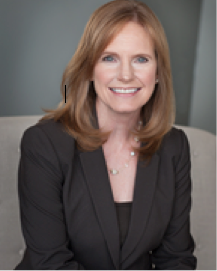
Alice Alvey, Master CMB
She handles development of their World Class Training program designed to support UHM partners and organizational effectiveness.
Prior to UHM, Alice served as Senior Vice President at Indecomm leading the Indecomm-Mortgage U division, Internal QA and Compliance and SaaS technologies. Indecomm acquired Mortgage U in 2013, where Alice was President/Co-founder, providing training and consulting since 1996. Prior to MU she served as SVP of Operations at a national bank overseeing operations for wholesale, retail and correspondent from underwriting through servicing, and compliance.
She has been in the trenches of mortgage lending operations from application through servicing for over 30 years. Her authoring work in training content, policies and procedures and the FHA/VA Practical guides illustrates her ability to bridge regulatory requirements with day-to-day operations.
Alice has been a weekly contributor to the Lykken on Lending show since its beginning in April 2009 and has made her weekly contributions to 450+ episodes!