
Key takeaways:
- 10X is a mindset, not one metric. Joe describes a “limitless mentality” and says the goal is to reimagine everything, not make small improvements.
- Human-first, agent-powered. An always-on engine follows up with leads and customers. The loan officer is educating the community, building the brand, and having the high-value conversations.
- Applied AI. Joe focuses on specific use cases that deliver business value, not adding AI to everything.
- A servicing-portfolio playbook. Total Expert’s Customer IQ enriches a portfolio with data and finds consumers with rising revolving debt, strong equity, and other signals, such as kids heading to college. AI agents run pre-qualifying conversations, then bring in the loan officer. Joe says one customer generated over 2,000 originations in about 60 days.
- Technology is no longer the limit. Change management is. Getting people to embrace a dramatically bigger mindset is the hard part.
- CEO priorities: be bold, communicate extreme clarity on the why and the standard of excellence, move fast, and make hard decisions about whether you have the right people in the right seats.
- Customer for life. The largest, richest organizations in the industry tend to be world-class at retention and loyalty.
- The next three to five years. Joe expects volume to consolidate toward the most aggressive, intentional companies, including smaller agile ones. Lenders will become multi-product, and a single originator directing AI agents could do $1 billion in production, a prediction he credits to Shant Banosian.
The mortgage industry is entering a transformative era where artificial intelligence is no longer just a tool for efficiency—it’s becoming the foundation of an entirely new business model. In this compelling Hot Topics episode, David Lykken welcomes back Joe Welu, Founder and CEO of Total Expert, to explore what it truly means to become a 10x lender in the agentic era. Drawing on insights from Joe’s presentation at the HousingWire AI Summit, they discuss how AI-powered agents are revolutionizing customer engagement, automating follow-up, identifying untapped opportunities within servicing portfolios, and freeing loan officers to focus on what matters most: building relationships and providing trusted financial guidance. Joe shares real-world examples of lenders achieving remarkable results, including one organization that generated more than 2,000 originations in approximately 60 days through AI-powered engagement. From overcoming resistance to organizational change to building customers for life, this conversation challenges mortgage leaders to think bigger, move faster, and fundamentally reimagine how their businesses operate. The message is clear: the future of mortgage lending isn’t about replacing people with AI—it’s about empowering people to accomplish what was previously unimaginable.
Transcript:
Welcome and the HousingWire AI Summit keynote (00:00)
David: Listeners, I’m honored to have Joe Welu back. He’s the founder and CEO of Total Expert, the customer operating system that’s transforming lenders. I’m so excited to have him here. Joe, good to have you back on the podcast.
Joe: Great to see you, David, as always.
David: First of all, Joe, you’re a really effective presenter. I love it when you talk.
Joe: Thank you.
David: It’s so impactful. When you spoke at the HousingWire AI Summit, you landed on some things I’m really excited to share with our listening audience. Even for those of you who were there, it’s worth going back and hearing it again.
We talk about being known by the company you keep, and you’ve been very fortunate to form some really good relationships with investors. I remember a conversation you and I had about a meeting you had in the summer of 2023 with Joe Floyd of Emergence Capital, one of your primary investors. Kudos for picking the right investors to help guide you. He told you then that the world was going to look incredibly different in three or four years. We’re now in that period, and it’s happening. He helped you lay out a roadmap that has literally changed how you manage and design your software.
At the AI Summit you talked about the 10X concept, and in your presentation you used a slide showing a farmer behind a horse pulling a plow next to a farmer with a John Deere tractor. I grew up in Minnesota, and my dad was a John Deere farm equipment dealer, so I’m very familiar with that analogy. It really spoke to me, because look at farming then and farming today. It’s a different world. Now we’re going into drones and autonomous tractors running around. It keeps getting crazier.
What “10X lender” actually means (02:25)
David: I want to understand the 10X concept. When you say “10X lender,” what exactly are we multiplying? The loan officer’s productivity, funding volume, profitability? You also touched on something that intrigued me, customer-for-life value. Talk about the 10X concept.
Joe: It’s really all of those things, David. It’s not about one metric. It’s about meeting the moment we’re in, which is a really special time in history from an innovation standpoint. These are the most profound changes in human history. Meeting that moment means having a limitless mentality. Much like the farmer with the horse versus the guy on the big John Deere tractor with autopilot, what can be accomplished, and the potential for that human being and that business, becomes exponential.
The 10X lender is about the mindset, being bold, and helping organizations think much bigger and reimagine what’s possible. If we have this technology, superintelligence AI, however you describe it, elevating the people in our organizations to their highest and best potential, incredible things are possible. That’s the spirit and the mindset. It’s about reimagining everything.
An operating model built around AI agents (04:05)
David: One of the things I like about that analogy is that farming isn’t going away. We still need food and we still need farmers, but how it’s done changes. Mortgage lending isn’t going away either, but how it’s done will change. We’re talking about business transformation. What does a mortgage company’s operating model look like when it’s designed around AI agents instead of traditional loan officer workflows?
Joe: First of all, we fundamentally believe that great lenders and banks that deliver financial products and services have a critically important role in guiding consumers and educating them to make high-quality financial decisions based on where they are in life. So it’s a human-first approach. But let me give you some examples.
Historically, a lender, an originator, or a bank was limited by the ability of human beings to remember to do, or actually do, the mundane things that maybe didn’t give them energy and weren’t their highest and best value, but were required. A lot of business falls through the cracks. Why? In many cases people are going through different stages in their process and might not be ready to transact today. But our industry is set up to serve a transaction at a certain moment in time. As companies, brands, and individual originators, we’re not great at staying in touch and following up with people over an extended time.
So picture the perfect scenario for a great loan officer. You show up at your office every day and do the things that give you energy. You’re out in the marketplace, educating the community, doing one-to-many brand building. And there’s an engine underneath you staying in contact with all those leads until the exact moment they’re ready for high-quality advice and need to decide which loan option is best. Then you just have those conversations. That’s the magic of what we’re seeing with AI: you’re elevating humans to their highest and best use of their time. With so much more focus on those activities, versus things that either don’t give them fulfillment or that they weren’t great at anyway, you break through barriers we’ve always had.
David: The people who are good at those activities aren’t necessarily your best loan officers. The best loan officers are the ones building relationships and being there at the right moment with the right information. That’s what you’re talking about. Can you give us examples of loan officers or companies that are actually realizing this?
Real-world results: reactivating a servicing portfolio (06:55)
Joe: Absolutely. We’re very much about what we call applied AI, meaning we apply it to use cases that deliver value to the business. There’s all kinds of noise out there, with people slapping “AI” on every part of their technology. What we’ve focused on, with the help of some amazing brands, many of the top organizations and many great mid-level ones, is going deep with our customers on use cases that can move the needle quickly.
Here’s an example. Some lenders have large servicing portfolios. We provide a deep and broad set of industry-specific capabilities that can be used in different ways. One is what we call Customer IQ. We take in the servicing portfolio and enrich it with insights from different data sources, which gives a much more granular, high-fidelity picture of where those consumers are in their financial journey. Then we do deep segmentation. For example: here’s a list of 50,000 or 60,000 consumers in your servicing portfolio whose revolving debt balances are trending up substantially. They also have great equity, and there are other signals, like kids going to college, that tell us this may be a moment when they’d value tapping the equity in their home with a HELOC or a closed-end second.
We package that intelligence and connect it directly to AI agents, the agentic capabilities, which launch campaigns and go through that list of consumers with human-like, high-context pre-qualifying conversations. When a consumer says, “Actually, I’m really interested,” I connect them to a human and bring the loan officer into the loop. The loan officer has all the information about why this customer wants to talk to them and what’s helpful to them. They end up solving a problem for the consumer, generating revenue, and meaningfully increasing the lifetime value of that servicing portfolio. We’ve done this at tremendous scale. One customer running that playbook generated over 2,000 originations in about a 60-day period that wouldn’t have been unlocked without those capabilities and that engine.
David: I’ve talked to some of your customers at your user conference. If anyone gets a chance to go, whether they’re a Total Expert customer or not, go there. It’s one of the best conferences out there. I get to sit and listen to your customers, and you have raving fans who are really making it happen. They’re giving statistics. It’s not just that they like it.
Joe: I appreciate the kind words, David. We wake up every day and I challenge our team: it’s up to us to earn the right every day to serve those customers and continue to earn that partnership. Whatever we accomplished for them last week or yesterday is in the past. It’s about how we partner and go deeper to help them accomplish their goals in the future.
Getting loan officers to trust AI (10:50)
David: You’ve certainly connected with the marketing departments, and many loan officers are getting the vision and adopting this, but we’re still seeing hesitancy in loan officer adoption. How do you convince a successful loan officer to trust AI with a relationship they spent years developing?
Joe: That’s a great question. In my keynote at the HousingWire AI Summit, which was a great event, I spoke about how in times of dramatic transformation like this, there’s a lot of resistance as you reimagine your business. You’re asking people to change the way they’ve thought about things, in some cases for decades. It’s naturally uncomfortable for human beings to hear, “Everything you’ve known to be true… some of it is still relevant, but a lot of the way you’ve done things has to start from a blank canvas.”
We’ll focus on what’s critically important: human-to-human connection with customers, education, advice. But the way we deliver it, the way we approach the market, the size of the goals, and the size of what’s possible all change. Your planning mindset, “How much can I accomplish next year?”, needs to be orders of magnitude bigger than before. That’s uncomfortable for some people.
I’m grateful to have great relationships with many CEOs and C-suite executives in our industry, and I try to have half a dozen conversations a week with them. We talk a lot about this. Technology is no longer the limitation. It’s the change management, shifting the hearts and minds of our people to grab it and embrace it.
David: Going back to the farmer behind the horse-drawn plow versus the autonomous tractor operating in the fields without even a farmer in it. It’s extraordinary, and it’s really happening. Loan officers, I’m going to quote Joe Floyd’s words to Joe Welu from some time back: we’re seeing a world that’s transforming in front of us. Either you’re going to be a part of it, behind a horse holding a plow, or you’re going to be back at the farmhouse watching your tractors work autonomously in the field, farming thousands more acres than you could ever have imagined with a single operator.
Joe: And, not to take that analogy down a dark path, but ultimately they’re going to end up taking over your farm. That’s what’s going to happen. For the audience’s context, Joe Floyd is one of our board members, one of our largest investors, and a mentor and good friend. He’s really on the frontier and the bleeding edge of these changes. He set up a visit for me personally at OpenAI’s headquarters before it was really a big thing. It’s way beyond even what they imagined at that point, but I got to see the energy and the pace of things happening. That was a wake-up call and a challenge for me, and I’m really thankful for him as a partner and ally. I have great investors across the board, but he was one who really challenged me.
David: Anyone listening can benefit from this, even without Joe as an advisor or investor. I study these guys and their perspectives, because they’re investing in so many companies like yours.
What a CEO should do in the next 90 days (14:45)
David: Let’s talk about leadership and execution. If you’re talking to the CEO of a mid-sized mortgage company, what are the first three things they need to do and change in the next 90 days to not just stay relevant, but, I’ll be a little more dramatic, to survive?
Joe: This is a deep question, and we could spend a lot of time on it. I’ll try to be succinct about what I think are the most important things.
First, as a leader, this is a time when you have to be incredibly bold and not be fearful of upsetting the status quo or your existing team. Set the big vision for what you want your company to embrace and become. Then communicate with extreme clarity to your key leaders: the why, where you’re going, and what’s required to win going forward, as a company and as individuals. That’s the essence of the transformation that has to happen.
Where I see things fall apart is when it’s not extremely clear and there’s no alignment at the highest levels of the organization on the standard of excellence for the pace at which you adopt innovation and the speed at which you get important things done, like rolling out products and launching pilots. You have to be thoughtful and aggressive at the same time.
Then it’s making bold decisions very quickly. This is painful, and nobody wants to talk about it, but it matters right now. If you’re going to build a lasting organization that wins, you have to be honest with yourself: do I have the right people in the right seats? In some cases, yes. In some cases, the people who are there can evolve and grow to this next tier and adopt the new mindset. In some cases they just can’t get there. You owe it to your organization, your customers, and yourself to make those hard decisions and drive that change. In my opinion, the future is here, it’s just not going to be evenly distributed.
David: I like the phrase “evenly distributed.” It’s one of the most exciting times to be alive. Mortgage lending and real estate financing aren’t going away. How management…
Joe: Homeownership in America, right?
David: Nothing is changing about the American dream. If anything, I think our best days are ahead. We’re going to have some of the greatest growth because of the automation it’s bringing, but it’s going to go to those using tools like what you developed at Total Expert.
Joe: In our industry, unfortunately, we have to deal with the cyclicality of the 10-year Treasury and the markets, which can make it feel like the whole world isn’t aligned in our favor at any given moment. But over the long haul, do you believe in homeownership and in the power of the American dream? If you do, your role as a lender, someone who makes those dreams possible, is going to be really important. How it’s delivered, executed, and scaled will just look different.
Customer for life (18:05)
David: One of the things you hit on in your speech is the customer for life, the lifetime customer. As an industry we have an abysmal track record of getting that customer to come back. Now, with what you’re developing, we’re equipped with the tools to stay connected well after the first transaction. In practice, not just in theory, you need that customer to keep coming back, and that helps build your volume.
Joe: Customer for Life has been one of our North Stars since we started the company. We’ve always believed the most powerful growth engine for any business is customer loyalty and lifetime value. Once I win a customer, how can I take care of them for the entirety of their life, with all the different products, services, and capabilities we can provide? That’s a shift for much of our industry, partly because of how sales compensation has been structured. It’s about the next transaction, the next transaction. The real opportunity lies in world-class retention and loyalty. All you have to do is look at the largest and richest organizations in our industry, in terms of balance sheet and capital structure, and look at the patterns. They were pretty world-class at retention and loyalty. What can we learn from that?
What the industry looks like in three to five years (19:35)
David: Let’s look forward. You’re an innovator with great foresight, surrounded by brilliant minds who help you build a map for your company. What does the industry look like ten years from now? Are we seeing a lot of consolidation? What does a mortgage company look like ten years out?
Joe: I love the question. To answer it accurately, ten years out is really impossible. What I can tell you is what we see over the next three to five years: the fruits of all this innovation will not be evenly distributed. That speaks to consolidation. I don’t think it means only the big guys win. In some cases, smaller companies that are more agile and aggressive, and can navigate change management more easily, have distinct advantages. So I don’t think it’s a size thing. I do think volume will consolidate toward the companies that are most aggressive and intentional about driving relentless change, focused on building lifelong customers.
I’d also say becoming not just a first-mortgage organization. You used to be able to run an entire business on first liens and government mortgages. I don’t believe that will be the case in the future. Many of our lenders are becoming multi-product financial services organizations, which I think is a great thing, but it does mean market share will be distributed differently.
I just sat down with a great friend in the industry and a good human, Shant Banosian, who has been a top originator, the number one in production for many years. We had a great conversation at Digital, and we were debating this topic. He said, “Joe, in the next three to five years, you’re going to have a single originator who can do a billion dollars in production by themselves.” Wrap your mind around that. He meant AI agents directed and orchestrated by that human loan officer, who is intentionally focused on one-to-many brand building, educating the community, leaning into financial knowledge, and driving the dream of homeownership, with an increasingly agentic engine underneath serving those customers. It doesn’t mean less human. It means the scale and the process in the middle look different.
David: That’s exciting. A billion-dollar originator.
Joe: It’s crazy, right? But I think he’s right. Is that going to be the norm? Probably not, because there are still great partnerships at the local level, and there are micro-markets and segments that are different in every metro area in the country. You can’t put a blanket over it. But I think large, fundamental, thematic shifts are going to happen, and one of them is the ability to consolidate that volume.
David: An exciting future. Get on board. It really comes down to picking the right tech partners, companies with a vision to help you, listener, get to where you need to be so you can be that 10X lender.
Accelerate and wrap-up (23:15)
David: Joe, thank you so much for being here. What a great conversation. I loved your presentation at the HousingWire AI Summit and I love getting together with you. Are you having an event this year?
Joe: Our next Accelerate event, our industry conference, is in May. I believe, no, I know, it’s going to be in Austin, Texas. The team should be getting all that out soon. We’re going to change the event up a little, making it bigger and better and more thoughtful in the content we bring, working with our customers. We just want to provide value to our customers, our partners, and our industry, and if we do that, the rest takes care of itself.
David: I can’t wait. Austin is where I just moved from. I now live in Knoxville, Tennessee, as a result of getting remarried. But it’s a great place for a conference, and I applaud you for it. Great to have you on the podcast. Thank you, Joe, very much. I look forward to seeing you here soon.
Joe: Always a pleasure, David. Thank you.
David: Thank you.
Important Links and about the guest:
- Total Expert Website
- HousingWire AI Summit keynote – Joe Welu
- 10X Lender conversation at the HousingWire AI Summit
- LinkedIn – Joe Welu
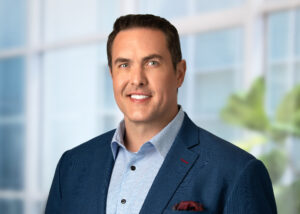
Joe Welu is the founder and CEO of Total Expert, the purpose-built customer operating system trusted by more than 200 leading financial institutions including 15 of the top 25 U.S. Banks and Lenders. For the past decade, Joe has helmed Total Expert’s vision and strategic direction, taking the company from a fledgling startup to industry leader. Under Joe’s leadership, Total Expert has received numerous awards and distinctions including 6 consecutive years on the Inc. 5000 list of fastest-growing companies in America, 5 time recipient of the HousingWire Tech100, and 4 time winner of the coveted HousingWire Vanguard Award recognizing C-level housing industry trailblazers.