
[David] Alice, let’s get into your commentary. Some interesting things you’re gonna be reporting on today. I say good to have you with us. Good to have you back from vacation. And thank you for- Good to be back … the report that you gave us last week, by the way. That was good. Even though you were not here, you were here.
[Alice] And again, I’m gonna be looking at MBA here, the Mortgage Bankers Association, for bringing the issues forward that we really need to pay attention to. And so in this week’s news, Monday news link, they brought up the Colorado Department of Law proposed rule to clarify and implement Colorado’s Automated Decision Making Technology Act, ADMT So essentially, this is a technology this is an attempt to try and across all industries, so this is not a mortgage specific act. But what happened was the law was passed in Colorado, I believe back last year. Just recently in August here, the or in May, the law was changed, and the change is what we now all need to pay attention to. Because in this is a component that references that if, essentially, I’m gonna summarize it, so all of you lawyers out there, bear with me. That essentially if any kind of automated I’m sorry, if artificial intelligence is used on the, in the loan decision-making process, you’re going to need to include in your adverse action notice a statement about the fact that – artificial intelligence was used. And w- when I put that in give that to the consumer, I’ve also got to include wording that tells them they have the right to have a human look at this And this is what’s new. None of the other states go this far who have already tried to put in any kind of AI notifications that must go out to consumers or, a- this is the first state that’s going this far that would be, for example what’s gotta get clarified is if I have a loan that’s denied by DU or LP, I am the one who’s deploying the technology as a lender, which means I am using the automation, and if the consumer says, “I want a human to look at it,” now I have to manually underwrite that loan. In some states, the technology laws are along the lines of I have to be able to explain it to the consumer, I can still use that, I have to be able to, help them understand why the loan was denied. But Colorado’s law leaves this open, so we have terms that need to be clearly defined during this proposed rule process. As we have today, a law comes out, and then we’ve got an agency who’s gonna clarify the details. Terms that really need to be described are what is materially influencing the consequential decision, and can we get an exemption for Fannie, Freddie, and HUD’s total scorecard, as an example? Other terms: the law’s talking about if, as long as it’s commercially reasonable if it’s commercially unreasonable, then I would not have to have a human intervention. So again, a place for AUS to be excluded, especially collateral, ’cause that’s clearly a scoring model that’s used for the collateral underwriting, and those are specifically looped in here as being something that the consumer would get a chance to say, “Hey, I want that manually looked at.” So we really need clear distinctions. MBA in their news link gives a quick summary of what those distinctions need to be. In this case, you’re gonna need to reach out to MBA to, if you have thoughts on this, maybe consolidate that with your company. If you’re not licensed in Colorado, my thought to you is this is what’s coming as an industry. We’ve seen this before, where one state implements something and then before you know it, it becomes a federal policy because someone goes, “Oh, I like that. I’m just gonna copy that.” And, Or we get so many different ways. We used to say, “You’re driving your car down the highway and have to change my tires every single state I go to.” If it gets to be too much of a patchwork, does Congress now, at the federal level, start to get involved to say, “Okay, we need a federal law to be able to be able to straighten all of this out.” For those of you who do business in Colorado pay attention to this, get in touch with MBA. And for those of you not this is what we have to watch out for and why the association helps us keep track of these things. So watch for this in your states. We don’t have much time. We have until September 4th to be able to get our thoughts together and send it over to them, ’cause they’re gonna come up with a final draft and get that back out. So I thought it was interesting. I’d love Alan’s thoughts on this as we see more and more laws on artificial intelligence coming out. Allen, are you there?
[Allen] Yes, I am here. And first of all I think that’s gonna become the norm. I think it’s smart. And we clearly as an industry shouldn’t be relying only on AI to underwrite our loan files. Still having our teams to not only manually underwrite, but to also be able to handle the exception process, right? We’re integrating quickly all these AI tools into our industry, and we are in the position where we want the ROI. We can’t just immediately start replacing people and saying we don’t need an underwriting department now,” or, “We don’t need a disclosure desk anymore,” right? We still need those things, but we need AI to make us better, smarter, faster. I will just put this last point in there about what you said, Alice. in the EU, so that’s in Europe, folks, they just have a law that passed. It’s called AI labeling, and what they said it was on August 2nd that this was passed. It’s now requiring… So the EU now requires all AI-generated images, video, and audio to be labeled as AI. 190 companies have already signed on, which includes Google, Microsoft, Meta, Anthropic, OpenAI, and many others. Get this, the fines are up to millions and millions of dollars on the violation side. Also, it’s not in the US yet. There’s no federal law, there’s no mandate, no equivalent rule. But some states are moving ahead, like California and Texas, but nothing’s national yet. So exactly to what you just said, Alice, we will be identifying, I guarantee it, in a short period of time what is and what is not AI and helping people in those decisions about what they wanna do.
[David] Yeah, that’s a good point. it seems fairly logical, and I think overall, I think Marc, you said it when we were talking about this before we went live since you actually support the idea
[Marc] Kinda, yeah. I think we need to look at all options out there and I think there’s things that you can support and can’t support. But I think the thing that, that concerns me, we treat too many things we’re dealing with in industry in black and white and not looking at the variables around it. And that’s what I like about Alan’s analytical things that he does. He gives us the black and white around it, and not just a, a solid thing. And we need to approach our industry more that way. In, in that respect, one day I might like it, and the next day I might not, just because how you look at those other elements that we should be taking care of and looking at.
[David] Yeah. Very good. Alan. First of all, Alice, thank you very much for your report. Good to have you back.
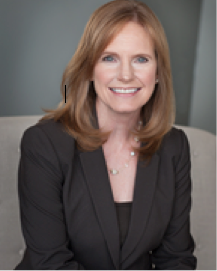
Alice Alvey, Master CMB
She handles development of their World Class Training program designed to support UHM partners and organizational effectiveness.
Prior to UHM, Alice served as Senior Vice President at Indecomm leading the Indecomm-Mortgage U division, Internal QA and Compliance and SaaS technologies. Indecomm acquired Mortgage U in 2013, where Alice was President/Co-founder, providing training and consulting since 1996. Prior to MU she served as SVP of Operations at a national bank overseeing operations for wholesale, retail and correspondent from underwriting through servicing, and compliance.
She has been in the trenches of mortgage lending operations from application through servicing for over 30 years. Her authoring work in training content, policies and procedures and the FHA/VA Practical guides illustrates her ability to bridge regulatory requirements with day-to-day operations.
Alice has been a weekly contributor to the Lykken on Lending show since its beginning in April 2009 and has made her weekly contributions to 450+ episodes!