
[David] Alice, let’s get over to you. There is a lot for you to talk about. I’m really interested in your perspective on the New Deal, department of Labor proposes the on the independent contractor stuff, what you got for us.
[Alice] Yes. Thank you Dave for sending the Garris horn article over to us. We all got a chance to brush up on the department of Labor’s proposed rule. So they actually published this. February 26th, it was a proposed rule to rescind and replace the Biden rule. So for those of you trying to keep track the Trump administration in 2021 had a specific rule for defining an independent contractor that was basically using a two weighted scale. First two items you would weigh first. That’s basically whether you have control or, whether or not you have an opportunity for profit. And then there were four other factors that weighed in. Secondarily, the Biden administration changed that and put all four on equal footing, which a lot of people interpreted. And I’m oversimplifying this, for those of you who are attorneys out there then, right? They essentially it made it. More equal footing between all the six items. And so people had a tendency to think that really put more of a nail in the coffin for loan officers and processors and underwriters to be paid 10 99. So now this proposal, and by the way, that hasn’t been enforced since I think May of 25. So we’re coming up on, 10 months or so that no one’s even been enforcing that Biden era interpretation. So now we’re back to here is the proposed rule that has been published now for a little bit and you have a little bit more time to comment. You have until April 28th to comment on this, which I do recommend if you want some clarity on it. But this is going back to a core factor analysis, really assessing whether. What’s the control that the loan officer has? Or, and I say loan officer because that’s typically who’s in this bucket, right? But it could be processor, underwriter, anybody within the mortgage space. How much, what’s the nature and degree of the workers’ control over their work and then their opportunity for profit? Are they actually in control of their own profit and loss structure? And so when I look at this and think, okay, it’s changing again and maybe some people are reading this as it, will it lighten up and can I now pay an LO 10 99? We were talking a little bit ago before the show, who wants to be paid 10 99 as a loan officer at a mortgage company? Just let’s start with a few reasons why. I just don’t wanna be in Yes. Having my own risk. But on top of that is the Safe Act. So this is just one component. The Department of Labor doesn’t oversee everything that you have to consider. When as a business owner, whether I’m deciding if a loan officer or processor underwriter in my pipeline, in my business process is able to be paid 10 99, the one thing I will tell you is don’t read IRS Tax Law as your guide. That’s just paying taxes. That’s not the guide for what can I do with my employees. So Department of Labor is one aspect of it. You’ve got Truth and Lending Act, loan Officer compensation, which really is the driving thing that says they aren’t working on profit. That truth and Lending starts to come in to say you can’t meet test number two, this opportunity for profit because of loan officer compensation rules. So it’s so muddy. As we said before the show, this is an area where we say, call your lawyer if you wanna pay someone 10 99. ’cause it’s very complicated to try and just simply pull it off.
[David] Yeah. I think one of the things that’s so significant about this, Alice, is the bigger companies have this figured out, I think most legitimate. But there’s still a number of really small companies out there. I’m thinking of several that still go if I could do everything 10 99, it’d sure save me a lot of trouble on my end. There’s a whole lot more to be thinking about on this. So I think this is more problematic and may show up as a greater percentage for those smaller companies that are out there. And we have a lot of them listening to our podcast. And so I would say, go ahead.
[Alice] I was just gonna say, I like decision trees to keep life simple. Sometimes. Just ask yourself a simple yes no question to get started down the path. And if I’m a loan officer, I’m thinking, wow, I really wanna pay 10 99. I hear realtors can be alright. They’re a separate bucket altogether and state and federal law. So don’t compare yourself to them, but just going with mortgage loan officer, can you sell a loan to another company? That’s one of your first questions to ask yourself. Or is my employer, they’re getting all my business. I might be able to pick another investor, but ultimately my employer handles lawyer is delivering. Yeah. Doing and sending that loan to that other investor. That right there is telling you’re not independent.
[David] Exactly. You wanna be independent, go set up your own mortgage brokerage operation. Yes, Mr. Kittle.
[Kittle] Certainly different times, but and I think this may be relevant to what we’re talking about, but I always made sure Myos knew my investors, who they were and. What the guidelines were in particular loan, where it had to go. And they had the complete freedom to pick based on the price, if that’s where they wanted to send to that particular investor. We didn’t have anything, but we thought good investors that we could trust and vice versa. So there was I just don’t know how, I listened to everything Alice said, and I totally agree with what she said. I don’t know why, if this is happening or the fear of it’s happening would take place in this with all the technology and everything to follow it today. I don’t know how you could do it and get away with it or who would allow it.
[Alice] To your point, the company is the one who has the agreement in that scenario, right? Yes. Yeah, absolutely. The loan officer has their array of investors that they might be able to choose from, and they might work directly with them, but it’s the company who sells the contract with that investor. And you’re using the company’s processors and underwriters to facilitate that and the company’s process.
[David] Yeah, that’s right. Very weak argument for the 1099. Nonetheless, it is going on out there with the smaller companies, more of the startups. They’re trying to exist on that on that basis. Bill, any thoughts you have?
[Bill] I completely agree with Alice and Mr. Gittle. If you wanna be independent in the sales space, there’ll be a broker. There’ll be a broker. Yeah. It’s very simple. There’s a way, there’s a way to do it. To Alex’s point, I don’t think there’s a lot of gray area in the middle. People try and create it, but I don’t think it’s there.
[David] It’s again, like those that are choo to float. I think it’s a very small percentage of people that are out there doing it. But the ones that do it, they face consequences. Alice, the question I have is how do the states, we’ve seen more of a distribution of the regulatory burden being shifted out to the states. We’re seeing more and more states being a bigger problem for mortgage bankers. The more states you’re in, the more regulatory body you have coming in and looking at your business.
[Alice] Exactly. And the states have their own laws, right? We haven’t even brought that aspect up yet. Yeah. The state level Safe Act interpretations all come into play. States. There are a couple states that specifically prohibit 10 90 nines. Others that do vaguely allow it. And again, I would say you need legal counsel if you’re thinking you wanna go this route for any of your employees. ’cause there’s so much to consider. You made me think of a really funny story where sometimes Bill, where there people of the gray area, I’ll never forget, and this is a very top person, so I cannot say their name. And a mortgage company, very large national mortgage company, this is 20 years ago, comes in and says, okay. There’s this RESPA thing, this section eight thing, and he had like circles and arrows. Picture Alice’s restaurant wrong, right? Yeah. Circles and arrows on the back of each page. And trying to figure out a way around this RESPA thing, because I wanna pay my realtors, right? I wanna figure out how to pay the realtors. And he had all these drawings and all these LLCs and different ways I thought that looked like a shell game. And I thought, at the end of the day, the answer’s still no. So
[David] You gotta admire the effort that goes into that. But has, if I spent that time using the same effort going out, I’m trying to get more relationship relationships, wouldn’t I be better off? And so yeah, There is we used to call ’em the dingoes. In,, australia. They have the dingoes and they’re always, the branches are always complaining how the dingoes get through the France. So we kept saying that about our loan officers. The loan officers are like dingoes in Australia. They’re always trying to figure out a way to get through the fences we put up to protect us and them from the We love them. Yeah, but we love them. And the truth of matter is that’s a part of that nature. It makes them so good. So we’re not trashing you lls. Just make sure. It’s just there’s a reason. Pay attention.
[Alice] All right. Go spend your time on something else, right? Yeah. W too.
[David] I think this is another opportunity to be sure. Originator sign up for Garris Horn, Mitch Kider, all of them produce blogs and newsletters. Even if you just do a perusal through it, read it through, dump it in chat, GPT, jump ’em all in chat, GPT, see what are the things that I need to know. If anything, that’s what we got. Chat GPT to do a lot of the analysis now, but the most important part is don’t ignore this stuff. These guys publish this. Troy Garris, who’s a good friend, someone I respect tremendously. This as is Mitch Carter, as is so many out there. So I left your name off the list. These are two of the people we talk to regularly. I just recommend you to plug into these things and then and if you don’t say, I don’t have time to read it, I don’t understand it, then dump it in Chad, GPT or your claw or whatever you want, and have it come back and give you a distilled version of that and you’ll get it because it works. Which is a great segue into Alan in a minute. Alice, do you have anything else for us that’s on the radar screen?
[Alice] No. That’s the big one for today, Dave.
[David] Thank you. Good.
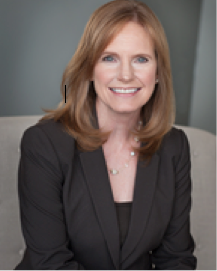
Alice Alvey, Master CMB
She handles development of their World Class Training program designed to support UHM partners and organizational effectiveness.
Prior to UHM, Alice served as Senior Vice President at Indecomm leading the Indecomm-Mortgage U division, Internal QA and Compliance and SaaS technologies. Indecomm acquired Mortgage U in 2013, where Alice was President/Co-founder, providing training and consulting since 1996. Prior to MU she served as SVP of Operations at a national bank overseeing operations for wholesale, retail and correspondent from underwriting through servicing, and compliance.
She has been in the trenches of mortgage lending operations from application through servicing for over 30 years. Her authoring work in training content, policies and procedures and the FHA/VA Practical guides illustrates her ability to bridge regulatory requirements with day-to-day operations.
Alice has been a weekly contributor to the Lykken on Lending show since its beginning in April 2009 and has made her weekly contributions to 450+ episodes!