
[David] Let’s get over to Alice Alvey. Good to have you here. Happy New Year, Alice Alvey. So grateful. Thank you.
[Alice] Thank you. Happy new year everyone out there. Year, another year in this podcast, 17 plus years now. Amazing. I think this year will be our what year? The first one was oh seven. Seven? Is that what we said? Yes. So this will be 19 years and 19. Her first one was about the first week of April. Yeah. Ish. Yeah. In oh seven.
[David] Hard to believe. Yeah. Thank you Alice, for being here all these years and staying in it even after you’re retired. You stay in it.
[Alice] It’s too much fun hanging out with this group and talking about the markets and the business. So in my segment today, I am gonna continue a little bit more on FHA, finally publishing their actuarial report, which is something I always look forward to in November. I want everyone to keep in mind a couple of things. One super important thing for those of you don’t deal with FHA all the time. FHA is a big insurance company. So like David brought up, we have to go after title insurance costs and homeowners insurance costs. FHA is just another big insurance company. They are not like Fannie and Freddie one bit. They don’t have shareholders. That’s right. They have been good over. Their history that they have not needed the treasury for the most part to keep them running the mutual mortgage insurance fund, which is the mutual, the insurance premiums that come in. Two parts on your forward FHA mortgages. Marc, our illustrious member here is the expert on the hecu, so I’ll set that aside ’cause that’s a different ballgame within the report. But you really should you can get from the MBA’s a news link that they publish every Monday, which I’m a loyal reader of the Monday News Link, you can get the link there to the actuarial report, say that five times fast. And I find this report is hugely beneficial for lenders to understand. What does FHAs business portfolio look like right now? And Bill Corbett brought up a little bit ago about the layers of risk, and this is a segment in the report it talks about, it shows you the, the top three layers of risk in any loan. It’s not just FHA, you’ve got credit score, LTV and DTI and FHA is watching those in this report to see what percentage of their portfolio carries those three risks. I have done FHAs my entire career. I love this product. I have taught this product my whole career. I actually taught it to FHA and to Fannie Mae, so I’ve had some good audiences to test what I’m saying. And I also wrote a book on it. I wrote before FHA redid the 4155. There used to be about four different volumes, and I wrote a thousand page book that was called the FHA Practical Guide. It was actually distributed by all.
[David] Oh my gosh, I remember that so well.
[Alice] Yeah. The Practical Guide. Yeah. Yeah. And one for VA too, that’s how ingrained I am in everything FHA and this product is, [David] I’ve forgotten that you wrote that thing. That’s amazing.
[Alice] Yeah, it was like the, how to read it in English as opposed to, FHAs reading it like it’s preparing your tax returns instructions. But they’ve gotten much better. But I’m a big fan of FHA and the risk layering to me is a component. I’d like to see us leave alone. I don’t think it’s hurting them. I’m glad they’re monitoring it. But FHA is that product where you say, in every bucket, we are willing and able to give those borrowers that opportunity who walk the line in each of these categories that is this product, in my opinion, and that’s the market that they serve, that lower mid score that’s okay with a slightly higher DTI And I would hate to see that
[David] Keyword slightly higher. Slightly higher. Relative to what Conventional’s doing these days. Yes. That’s a whole show in and of itself.
[Alice] But so they report on it, they’re monitoring it, that’s not out of control. They also report on the fact that they changed their loss mid or loan loss and loan modification requirements at the end of last year. So that too, you have a positive impact on future portfolios and they have a hundred billion in cash according to this report of cash or cash equivalents. There are, everywhere you read through this, they’re making their own 9 billion own case. That it is okay to keep things as they are with the things they’ve already put in place and they have the capital to do so to make some effective change. But for those of you in the FHA world or who are not, who are thinking, should I be doing FHA loans, you should absolutely be doing FHA loans. It is a stable part of any business model in mortgage banking. And then also making sure that you understand what are other lenders doing. That’s what this report shows you also, what are the typical credit score ranges and are you doing enough to balance your risks? So I think there’s just so much great information. Everyone should read this report, who runs a mortgage group. Secondly, we did hear CFPB funding is up and running until February 24th. So that’ll be a day that we’ll be watching and report on to see what happens then. And then my predictions for 2026. I’m just gonna make, it’s more of a goal than a prediction. I think we talk a lot about AI and I really do think that the number one area people could make huge strides on in mortgage banking. If you say, I can’t control rates, I’ve gotta have business plans, all of that, I’m, my voice on the show is usually the operations side, and I’m gonna say. AI should fully be embedded in how to better manage your teams. So many people are not good at communication. When times get tough and there’s tough situations. AI can truly help and bring your team together, give you ways to talk about, in this tough situation that I have, you could do between loan officer and processor scenarios, right? They’re not getting along. This is what happened. How would you best approach this scenario and see what AI has to say, and then talk about it as a group? Use it as a way to talk and communicate to better manage your people and be better managers in tough situations. That’s my goal for 2026 for everybody out there. If you have a solid team and solid communication, you can do more volume. That’s just one aspect.
[David] Yeah. That, yeah. At a lower cost when it’s functioning Yes to the two things that I look at. Take the dysfunction outta your teams and you faster get the dysfunction outta your team, which faces joy at work when you come to work and dysfunction’s gone. People like showing up to work. People like community, okay, it’s a job. People say it’s just a JOB, not if you have a right culture. And that’s one of the things that you and I have had the privilege of working on together and speaking to different people, Alice, over our many years of being friends is the importance of culture. It does make a difference. And I love the fact that you’re using AI to begin to help in that process of improving how we talk, how we look at things. That’s good. Good job. I know Mark’s using it a lot. Marc your thoughts on the AI component. Anything else you wanna add to Marc?
[Marc] I think we gotta use it a variable to us. And I’m sure if Alan was on, he’d say this too. The problem with using ai, AI can make a mistake. Okay? So it’s real important when you look at the variables you’re using and the things you pull out, AI, that you get a secondary confirmation on the key ones to make sure they’re on target. And other than that, I think it’s one of the best tools as I’ve been, is certainly in my day-to-day work has improved my efficiencies ability, communicate multiple times over. Yes, sir. Yeah.
[David] Then I think the thing that, Alice, I wanna underline underscore one thing that Alice said, use it as a tool. It’s not telling you how to do it, , it’s a discussionary point. And Alice, maybe we should spend more time on exactly what that looks like, Alice, when, and another segment if we could take some time to do that. I wanna get over to Alan’s segment ’cause he pre-recorded the comments, he couldn’t be with us, so I’m anxious to do that, but I would really like to dive into that because a lot of people are spending time with AI. But you hit on one of my favorite topics is how do we use this to become a more highly functioning team where we create joy at work, where people call, I can’t wait, I wanna go to work, I’m looking forward to going to work. And that’s what we need to create, should be a goal for everyone. My goal is to create happier workplaces where people wanna come into work. ‘ cause we do have to work most of us. Here’s the deal. Not only should we have to work, we should want to work, we make a contribution to one of the most important transactions. At least the we, those of us in the mortgages, we make the most important contribution to people’s lives by helping them own a home. How transformative is that? I love it, Alice. Good job.
[Kittle] Yeah, really compliment. Alice on that. One of the things, I’m sitting here and I know it and when she said it I was like the the duh moment, right? Which is HUD spelled backwards, right? They are an insurance company. They’re not Fannie Freddy, all right? And they’re way over their reserves and it’s a government insurance company and they can change it today and make an impact on affordability. Small, but they can, going forward, it’s right there in front of ’em to do. And we don’t need a passive voice saying, can you please take a look at it? We need people being vocal and saying, change it and wake up. And Alice did a great job. That was one of the better reports I thought you’ve ever done.
[David] So well done. Yeah, good job. Yeah, and I like you spending spelling HUD backwards, yeah. All right.
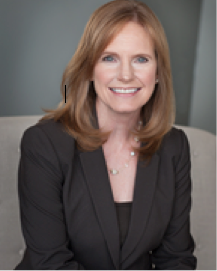
Alice Alvey, Master CMB
She handles development of their World Class Training program designed to support UHM partners and organizational effectiveness.
Prior to UHM, Alice served as Senior Vice President at Indecomm leading the Indecomm-Mortgage U division, Internal QA and Compliance and SaaS technologies. Indecomm acquired Mortgage U in 2013, where Alice was President/Co-founder, providing training and consulting since 1996. Prior to MU she served as SVP of Operations at a national bank overseeing operations for wholesale, retail and correspondent from underwriting through servicing, and compliance.
She has been in the trenches of mortgage lending operations from application through servicing for over 30 years. Her authoring work in training content, policies and procedures and the FHA/VA Practical guides illustrates her ability to bridge regulatory requirements with day-to-day operations.
Alice has been a weekly contributor to the Lykken on Lending show since its beginning in April 2009 and has made her weekly contributions to 450+ episodes!