
Key takeaways:
- Barry says volatility has risen since the election. A MOVE index reading above 90 forecasts extreme volatility in mortgage-backed securities, and it signals how bumpy rates may be, not which direction they will go.
- Volatility can raise mortgage rates on its own. Barry says the spread between the 10-year Treasury and the 30-year mortgage rose from a little under 2 percent to about 2.3 percent, adding roughly three-tenths of a point unrelated to the Treasury.
- He argues that the cure for higher rates could be higher rates, because high yields make bonds more attractive, and that a bond’s coupon gives investors protection when prices fall.
- On housing, Barry says owner-occupied household formations have fallen to about 780,000 a year from about 1.25 million earlier in the year, and builders are at about 840,000 units. If rates settle near 6 percent, he says demand could outstrip supply for a couple of years.
- He cites new net worth data: a median household at about $200,000, the bottom 25 percent at about $28,000, and an average homeowner at about $460,000 versus about $11,000 for a renter.
- Four things clients overlook when comparing buying and renting, according to Barry: principal is a transfer of equity, not a cost; the tax benefits; rent rises over time while a mortgage payment doesn’t; and the potential tax-free gain on a home sale, which he calls the “$75,000 gift.”
- On AI, Barry says originators who only facilitate a transaction are more vulnerable to replacement. Those who create wealth and added value for clients, and use AI to do it, build a moat around their business.
- After a long cancer journey, Barry says he is in remission. His message: whatever adversity you face, focus on what you can control and what you can do next, because happiness is progress.
In this compelling Hot Topics episode of Lykken on Lending, David Lykken welcomes back Barry Habib, founder of MBS Highway and one of the mortgage industry’s most respected market experts, for an insightful conversation about mortgage rate volatility, housing supply and demand, and the wealth-building potential of homeownership. Barry explains why higher interest rates could ultimately be the cure for higher rates, how declining mortgage rates could reignite housing demand, and why mortgage professionals must evolve from transaction facilitators into trusted financial advisors in the age of artificial intelligence. Beyond the economics, Barry shares an inspiring update on his cancer journey and remission, offering a powerful message about faith, gratitude, perseverance, and focusing on what we can control. This episode delivers valuable market intelligence, actionable business insights, and an uplifting perspective on overcoming adversity.
Transcript:
Welcome back, Barry: election-week volatility and the MOVE index (03:25)
David: Barry, it’s so good to have you back on the podcast. As we said in the intro, you have been so instrumental in calling so many things right about interest rates and what’s been going on, for a long, long time, decades. It’s an honor to have you here, friend.
Barry: It’s a privilege to be with you. It’s always good to see you, buddy.
David: So let’s start by looking at this election. Some are surprised, some are rejoicing, others are in shock. Let’s start with your perspective as it relates to interest rates. What’s going to change as soon as this newly elected body is in power?
Barry: It’s already been quite volatile since the election, both in the stock market and in the bond market. There are a couple of things we look at. In the stock market, if you want to measure volatility, you look at the VIX, but very few people look at the MOVE index for the mortgage-backed securities market. That has increased rather significantly. The magic number for the MOVE index is 90. When it gets above 90, extreme volatility is forecast. It doesn’t tell you the direction. It doesn’t tell you whether interest rates will go up or down. It’s essentially telling you to buckle your seatbelts.
Why mortgage spreads move: duration and servicing value (04:40)
Barry: Now, when it comes to the spread between a 10-year Treasury and a 30-year fixed-rate mortgage, that spread is very important, because volatility has to be contemplated. A 10-year Treasury is backed by the full faith and credit of the US government. A 30-year fixed-rate mortgage is also pretty darn safe, but it’s always going to ride above the 10-year Treasury because it isn’t backed by the full faith and credit of the US government. There could be some perceived additional risk, so there’s a premium for that, and that spread tends to fluctuate. The predominant factor in that fluctuation is duration: how long is that mortgage going to last? If it’s going to last a long time, it behaves more like a 10-year Treasury. If it’s going to last a short time, it behaves less like one.
Barry: Part of a mortgage’s value is its servicing, and that has to be determined at the time of closing. The servicing release premium goes into the price of the mortgage. As the price improves, the rate gets a little better. As the price doesn’t improve as much, the rate doesn’t get as good. That servicing value is based on how long the expected duration is. When you have a 3 percent mortgage, like we saw, those were expected to have a very long duration, because not too many people would rush to refinance them, and it might also prevent people from thinking about selling, because they got in when the getting was good. Conversely, when you have a high mortgage rate, 8 percent let’s say, the chances of refinancing are very great, and the servicing release premium diminishes.
Barry: One of the things that goes into establishing that duration is the MOVE index. When there’s extreme volatility, we don’t know whether rates will go up or down, but it means you could see rates come down rather quickly. And we did see that. If you look back from early October, I think October 8th, we saw about a half-percent decline, maybe three-eighths of a percent, pretty quickly. That causes more worry about prepayments. Because a greater percentage of prepayments can come into play, that volatility increases the spread. We’ve seen the spread rise from a little under 2 percent between a 10-year Treasury and a 30-year fixed-rate mortgage to about 2.3 percent. So you have a roughly three-tenths of a percent rise in mortgage rates that had nothing to do with the 10-year Treasury, just because of more volatility.
Data-center stocks, NVIDIA, and where the money is flowing (07:55)
Barry: All this is to say that mortgage rates have been more volatile. We’re looking at things like the election causing volatility, and we’re also looking deeper into the election, where you see gubernatorial wins in Ohio, Texas, and Georgia, which represent close to 40 percent of where all these data centers are being built. That has had an adverse effect on many of what you’d call the neo-cloud stocks: your Nebius, your CoreWeave, your IREN. These companies have seen a big drop, and there are also concerns about their financing. That has put some money into the safe haven of bonds, which has been good. But what’s interesting in the unfolding story about NVIDIA and Jensen Huang is that we see NVIDIA stock take a real tumble, but we haven’t seen that money go into the bond market either. There’s been a recent disconnect.
Hot data, Fed talk, and why higher rates could cure higher rates (08:45)
Barry: I think the reason for that, David, is that you’ve got a hotter inflation report just this week, a lot of negative jawboning from Fed members, and a reasonably hot employment report. All of those factors are causing bond prices to get a little worse and interest rates to get higher, forgive me, not better, higher. Could this all turn around? Yes, clearly. The cure for higher interest rates, interestingly enough, could be higher interest rates, because it makes bonds more attractive to invest in.
Coupon protection and TINA (09:15)
Barry: There’s one last point, and it’s what’s called coupon protection. There are two elements to a bond investment, and it’s different from a stock. A stock you invest in, it goes up or down, unless there’s a dividend. With a bond, if the price goes up, good for you, you made money. If the price goes down, you lose money, but you do receive the interest rate. If that rate is very low and the price goes down, you have very little protection. But if the rate is high, like it is now, where you get, let’s say, 6 or 7 percent on many bonds or on a mortgage, then even if you lose money on your investment, you’re protected. The coupon protects you from actually losing money, even if the price goes down. So it makes it an appealing investment.
Barry: David, remember a few years back there was something called TINA when it came to the stock market. TINA stood for “there is no alternative.” In other words, you had to invest in the stock market, because where else were you going to get a return above the rate of inflation? Well, now you have that with higher yields. So just maybe the 10-year Treasury in that 5.35 range could be a top.
Fannie, Freddie, FHA, and a bifurcated economy (10:50)
David: That’s a really good point, that even higher rates might be the cure for higher rates. One of the things I love every time I listen to you talk, Barry, and I’ve listened to you speak on stage, and you and I have been on Fox together on the center stage, is that you always do such a good job of educating whoever’s listening. You’re not only passing on market information, but Professor Habib goes at it again. That’s at the core of who you are, and I love the education you bring. Let’s talk about the spread, and the correlation between Fannie and Freddie conventional rates and FHA and VA rates. Let’s talk about where they are today and where they’ve been historically. It seems like there’s potential for some changes here.
Barry: Being a Fannie Mae board member, there are certain things I can say and certain things I can’t. There is a deep desire to help the housing market. There really is. And I’m very proud of the contributions I made toward Fannie purchasing mortgage-backed securities. That has helped alleviate the spread and bring it down, and Freddie Mac is doing that too. I think there’s more that can be done. Director Pulte really has a desire to do things to help the housing market, so it is front and center.
Barry: When it comes to FHA, we know they’re a bit more lenient, but they are also experiencing rates of delinquency that have been elevated. They were always higher, but they’ve elevated a bit more now. That’s something we want to keep our eye on. And let’s face it, David, a lot of people say the economy is doing great, and I agree it’s doing great for some. But we truly have a very bifurcated economy. Those who have real estate and those who have been invested in equities fare far better than those who are renting and have not participated in equity. We have a very disjointed marketplace, and it’s my own humble opinion that the Fed has had a lot to do with this. Jerome Powell bringing interest rates to zero and keeping them there for a long time really juiced the stock market and juiced real estate values. If you owned real estate and stocks, you were celebrating. If you didn’t, you felt like you fell behind. So this all plays into the housing market and makes it more difficult for those people to achieve homeownership.
The Habib overview of the housing market (13:25)
David: When you look at your crystal ball and at homeownership, what are your thoughts? It seems like the old law of supply and demand: there’s still very much pent-up demand, but I’m concerned about the supply side, with all the headwinds builders have. If you could give us the Habib overview of the housing market, what are you predicting and seeing for lenders right now?
Barry: Here’s where we are. For this discussion I can only give you national numbers. Clearly, we all know real estate is local. You listening know that it’s in your backyard, and it’s going to be different from the national number. But let’s start with the national number, because there are 4,400 ZIP codes and we can’t go into every one of them here. So supply and demand. Let’s understand how they’re measured in real estate, because people don’t really have a grasp of that.
Barry: The demand portion, if you want to see what real estate values are going to do, you measure by household formations of owner-occupied properties. Single-unit, owner-occupied. We are currently producing, on an annualized basis, 780,000 of those a year. That pace has declined from about 1.25 million near the first part of this year, when interest rates were much lower. So it’s very interest-rate sensitive. As interest rates have gone up, household formations have dropped precipitously, from about 1.25 million to about 780,000. That’s a big drop.
Barry: Now, what about the supply side? People get confused here. They think, somebody puts their house on the market, that’s supply. No, it’s not, because unless that person is going to live in a tent somewhere, they’re going to have to live someplace else. They occupy something else and relinquish a unit. It’s inventory neutral. New supply comes from builders. And builders are smart. It is really expensive for them to build a home and let it sit vacant. So builders who were producing well over a million units a year have continuously been slowing that down to match the demand. They’re currently at 840,000 units. That’s above the 780,000, but they’re continuing to bring it down. I imagine it will get closer to 800,000 units to match the demand.
What if rates return to about 6%? (16:20)
Barry: But here’s what people have to understand, David, and I think this is what separates those who see the future before it becomes obvious from those who just watch things happen. If you think interest rates might cycle a little lower, and what if they got back to around 6 percent? It’s not an impossible pipe dream. It’s actually very likely that it will happen. Then we can look historically: when rates were at 6 percent eight months ago, household formations reached a level of about 1.25 million. Maybe they go back to around there. Can builders match that quickly? Maybe eventually, but it takes time to get approvals to build. So you might have a couple of years, if interest rates stay at attractive levels near 6 percent, where demand outstrips supply. And when demand outstrips supply, what does pricing do? Obviously, it goes up. So here’s the advice you can give your client: this is an opportunity to receive appreciation as opposed to waiting and paying it.
David: That’s a great point. And you discuss this a lot in the news and all the information you put out on your website. Kudos to you on that. The MBS Highway is one of the most respected, most reviewed. How many thousands of people do you have subscribed to that? That’s amazing.
Barry: A little over thirty thousand subscribers.
Net worth: homeowners vs. renters (18:00)
Barry: David, there’s another really interesting point about homeownership and net worth. Net worth numbers are really important, and I want to get this right and give you the numbers exactly as they are. They’re brand new, we just got this data from the Federal Reserve. Let’s take a look at this together. I’m going to share my screen.
David: You can share your screen, and for those who are listening, it may be good for you to review them as well.
Barry: We’ll do both. Let me share that right now. Okay, I think you can see my screen.
David: Yes, perfect.
Barry: If you take a look at the net worth tiers, and this is brand new: what is the top 1 percent in the United States? It’s $16.5 million. That’s a very big number for household net worth. The top 5 percent are at $4.9 million. This has gone up a lot. The top 10 percent are at $2.6 million. So if you’re in the top 10 percent, you’ve got quite a significant net worth. The median, 50 percent, means half the people have more than this number and half have less. As you can see, it drops rather dramatically to $200,000. Isn’t that crazy?
David: Do you recall how this compares with the previous survey?
Barry: This has actually gone down for the middle 50 percent, and the top numbers have gone up. Again, it’s the stock market that’s doing this.
David: We’re seeing the separation of the haves and have-nots, much more pronounced.
Barry: But here’s the more stark one. Look at the bottom 25 percent. It’s $28,000. This is $200,000, and this is $28,000. That’s very meaningful. Now, some key stats: 50 percent of the wealth comes from home equity and 40 percent comes from the stock market. Isn’t that amazing? And you can see the average homeowner’s net worth is $460,000 versus $11,000 for a renter. That’s 43 times different. These are things that are absolutely critical for people to understand.
Buying vs. renting: four things clients overlook (20:20)
Barry: When somebody says renting is cheaper than owning, that can be a very short-sighted argument. David, if I may, can I talk a little about the difference between buying and renting? We saw the net worth numbers, and half of that comes from equity in your home. But somebody will say, I can afford the mortgage, but renting is so much cheaper, so it’s better for me to rent. Let’s just compare the payments. When you look at a mortgage payment being more expensive, have they thought about the fact that the principal portion is not a cost? All that is is a transfer of your own equity. Your net worth doesn’t change when the principal portion leaves your checking account and goes into equity in your home. It’s like moving money from my left pocket to my right pocket. I didn’t lose net worth. When you eliminate that portion, the payment gets a lot closer.
Barry: The second thing is the tax benefit. With the SALT deduction being increased to $40,000, maybe now you can have a benefit you didn’t think of, and when you look at the tax benefit of buying versus renting, that could bring the payment a lot closer, or maybe even make renting more expensive. The third thing to think about is time, which very few people consider. They look at the mortgage payment today and the rent payment today, and they have to understand that over time the rent payment goes up while the mortgage payment stays pretty close to the same level.
Barry: There’s a fourth one, and I promise you nobody talks to their clients about it, and they really need to. It’s the $75,000 gift. Think about this: if you were to not buy a home, keep your down payment in the stock market, and let’s say you do great, when you eventually sell that stock, do you get all that money? You have to pay Uncle Sam on your gain. Capital gains might be as much as 20 or 23.8 percent, but let’s say it’s 15 percent, because up to about $500,000 in income it’s 15 percent. Now with real estate, you buy a home and live there, and if you’re married and sell it for, let’s say, $500,000 more than you bought it, do you keep that whole $500,000? You bet you do. Do you have to pay tax? No. So if you’re in the 15 percent tax bracket, that’s a $75,000 gift you get from buying a home versus renting.
David: Great point.
Barry: Dave, you wonder why these numbers show so much wealth from homeownership. It’s those reasons we just went over. And of course we didn’t talk about appreciation.
AI, jobs, and the loan officer (23:40)
David: So many of our listeners, and an increasing number of them, interestingly, are consumers listening to this podcast, which was originally created for the mortgage industry and those involved in mortgage or real estate finance. So this is valuable information. When you look at AI, everyone’s talking about how it’s going to play into the employment numbers, economic data, even interest rates. What are your thoughts?
Barry: It’s moving so quickly, exponentially. Just like anything else, there’s a lot of good that could come from it, but there are also some things that may not be favorable. We all know the potential dangers. As it impacts your employment situation, there are clearly lots of risks for employment. But there also could be a need for AI to help democratize individuals being their own boss. You could use AI and agents very effectively to perform tasks for a startup or a small group that before didn’t have the capital to hire all the people needed, or the time, or the expertise. So AI can give people the ability to bring good ideas and good startup businesses to market. There could be a lot of upside, and individuals need to be thinking that way.
Barry: Whether you’re in the mortgage business or not, you need to be thinking, how do I use AI to do this? You certainly don’t want to be someone who gets replaced by AI. You want to be somebody who masters AI as a way to provide greater value for your customers. You need to be a master of the market and understand the market, and be able to have discussions like you and I are having with your clients, so they feel, boy, what else am I going to miss if I don’t do business with you? People will trust you more if they feel you’ve spent the time to educate yourself and gain expertise. But there’s a danger if all you consider yourself to be, as an originator or in any business, is a facilitator of a transaction. If a mortgage professional thinks, I’m just here to get a transaction closed, I think they become more vulnerable to being replaced by AI for tasks. But if they consider themselves someone who is there to create wealth or added value for their clients, and uses AI to get there more rapidly, then they’ve created a moat around their business and created greater value. That means they will be more desired by their clients.
Will AI shrink the loan officer ranks? (26:20)
David: Great point. I recently interviewed Joe Welu of Total Expert, who talks about the 10x loan officer. When you look to the future of loan officers, what are your thoughts? Are we going to see a smaller number doing greater volume because of AI? I see the potential for that, but…
Barry: Here’s the way I think about it. You have a lot of younger individuals who almost have a call aversion. I don’t agree with call aversion. I think it’s so important to talk to people, and you get so much done. But there are lots of younger people, and maybe some people who are not so young, who have an aversion to talking on the phone and much prefer text. So when you think about that, they’re going to be much more comfortable dealing with an AI situation. In addition, think about how far AI has come. I’m very well versed and familiar with it, not just because we develop it internally with our company, since we are a software company, but because I’ve been very much in tune with AI as a tool. I understand a lot of its flaws, and people don’t realize how flawed it is, with the hallucinations and the bad information you can get from it. But I understand the power and the benefits, because as I’ve gone through my cancer journey, I would talk to it for hours and use it quite a bit.
Barry: What I’ve discovered, and I think many people might feel this way, is that you almost get fooled into thinking you’re talking with a person. I’ll say, thank you so much, I appreciate that, and you’re talking to a bot, but your brain seems to think you’re talking to a person. The level of sophistication has dramatically changed so quickly. Think about the exponential gains that will occur. I think people, especially those text-instead-of-talk individuals, will feel much more comfortable allowing their transaction, especially a refinance, to be worked with a bot. On a purchase, some may and some may not. So, a long way to answer your question: if you’re going to be a successful originator, you have to do more than facilitate the transaction. You have to gain that customer’s faith, trust, and desire to stay attached to you because of what you are educating them on and the guidance you give them to help create wealth.
Wisdom, gratitude, and a health update (29:00)
David: Such a good point, especially when you look at the amount of information and all the factors going into it, the complexity of this decision. You touched on your cancer journey. First of all, we talked offline before we started this, and listeners get a chance to hear it now. You’re loved by so many in this industry, and many of us have been praying for you that this would have a good outcome. How are you doing? Tell our listeners.
Barry: Thank you. But one more point first, just to put a little cap on what we just spoke about: information is everywhere, but wisdom is a very valued commodity, and that’s where we want to separate ourselves. Now, thank you for your kind words and your prayers. So many people have been so unbelievably kind to me. I don’t have words to articulate my gratitude and appreciation and how humbled I am. I hope that to some extent I’ve conveyed how much it’s meant to me and how much it’s gotten me through, and how many tears of appreciation I’ve shed over all the kindness that’s been sent to me. I can’t imagine anyone would deserve that kind of unbelievable kindness. I am so grateful.
David: You’re well deserving of it, Barry. What comes through in every message you put out, the message of the morning, is the compassion and the desire for people to prosper. You care about people, so it’s not surprising to me that you get this kind of love back. It’s well deserved. The good news, I’m hearing, is that it’s looking good.
Barry’s health journey: what’s next (30:40)
Barry: Here’s the thing. It was a very nasty form of cancer, and I went through some very difficult treatments. I went through a very difficult chemo treatment. You remember I had that bag tied to me for five consecutive days, and then three weeks later I had to do the same thing again, a constant infusion of chemo for six rounds. And I thought it was all done. Here’s the crazy story. It’s August 2nd, 2024. I had my last infusion of chemo after going through this for five and a half months, and finally I’m like, I’m done. I had dinner at my son’s house with the family there for a little celebration, and honest to goodness, there was a gorgeous rainbow in the background. We were like, my God, that’s a sign. Only to find out a few weeks later that it didn’t work and the cancer was still there.
Barry: I didn’t fall apart. I didn’t cry in my soup. My attitude was, okay, what can I control? What’s next? I said to my doctor, okay, doc, what’s next? It was radiation. We went through 10 rounds of radiation, only to find that it did not work. I’m not going to feel sorry for myself. I’m not going to crumble. I’m not going to lose focus. I decided that whatever time God has given me, I’m going to be happy, I’m going to enjoy my time, and I’m going to bring joy to others. What was next was something called CAR-T. They take your T cells out of your blood, they program them, and they put them back into you. It’s a very dangerous procedure, because when they put them back in, they’re so supercharged you can have horrible reactions. So you typically have to be under unbelievable surveillance or remain in the hospital for about 30 days. I was blessed to be able to do it outpatient. I had to stay at a hotel near the hospital and go in every day for all kinds of checks. But I never missed a day of work. I did my daily update every day. I was happy. At night I went out to dinner. I tried to be positive through the whole thing. Only to find out that it didn’t work. A million-dollar procedure didn’t work.
Barry: Now you’re starting to run out of options. But because I remained active, positive, and focused, I was able to meet, through a friend, Dr. Patrick Soon-Shiong, who was out in LA, and Dr. Patrick put me on the drug Anktiva. It’s gotten a lot of publicity, and he has too. And thank God, a year and a half ago, and after a lot of treatments, by the way, I had to go out to LA every two or three weeks, sometimes one every three weeks, for over a year. Those treatments worked, and now I’ve been in remission. I’ve stopped going there for now, and we’re going to see how it goes, but I am in remission. I actually had surgery to remove the port a couple of weeks ago, so I no longer have the port. But I’m still being watched. The scans have spread out to every six months. You celebrate really quietly, because you know this is a nasty thing that can come back. But I’m so grateful to God, and so grateful for all the love and the friendships and the kindness that’s been given to me.
Focus on what you can control (33:40)
Barry: The message I’d like to share is this. Whatever adversity you’re dealing with, and I hope to God it’s not health, but what if it is a financial situation, a business situation, a family situation, a love relationship? Many people lose their optimism. Many people go inward and feel sorry for themselves. Many of them become unable to perform what they would normally do that brings them joy. What I would ask you is to focus on what you can control and what you can do next to improve. You don’t have to completely succeed. If I were to define happiness in a single word, David, it would be progress. By making progress, you feel happier. So whatever it is you’re going through, focus on what you can control, what’s next, and make progress toward that goal.
Closing thoughts (34:35)
David: Barry, it’s so good to hear the progress you’ve made. There have been a lot of us praying earnestly for you, because quite honestly, this industry wouldn’t be quite the same without you. We’d be losing such a powerful soldier, someone who has done so much to help many of us understand the complexity of this. I was referred to you as Professor Habib, back at it again, teaching us the complex and making it simple. We love and value you, and thank you so much for taking time to come on the podcast. I can’t say enough to say thank you for the friendship and your contribution to all of us. Thank you, brother.
Barry: Much love to you, brother. Much love to you and to those of you who were kind enough to spend a little time with us here. God bless you, and thank you for that time.
David: God bless you too, brother. Thank you.
Important Links and about the guest:
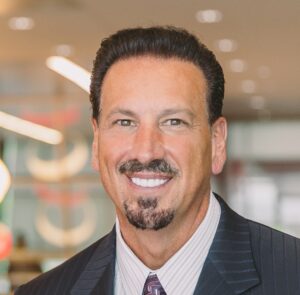
Barry Habib, CEO of MBS Highway, is an American entrepreneur and frequent media resource for his mortgage and housing expertise.
- Amazon #1 bestselling author for his book “Money in the Streets”
- Director on Fannie Mae Board
- Widely credited with saving the Mortgage Industry in 2020 from Margin Calls due to Fed Actions. His presentation to the Fed created stability at a critical time.
Notable Awards
- The 2024 Crystal Ball Award by Fannie Mae, Pulsenomics, and Zillow for the most accurate real estate forecasts out of the 150 top economists in the US, marks his fourth win in seven years.
- 2019 Mortgage Professional of the Year
- Finalist for the Ernst & Young Entrepreneur of the Year
- Named to Mortgage Global 100 List
- 2024 Distinguished Industry Service Award by NAMB
- The St. Armand Ventures Businessman of the Year 2021
- Named to the list of 100 People to Watch in 2023
During his mortgage sales career, Barry personally originated over $2 Billion.
He is the Lead Producer and Managing Partner for “Rock of Ages,” the 27th longest running show in Broadway history, which he also took around the world and turned into a major movie starring Tom Cruise.
He produced Criss Angel’s “Mindfreak” at Planet Hollywood in Vegas.
He is the highest rated speaker and trainer for over 25 years in mortgage and real estate.