
Key takeaways:
- Elizabeth says the brands known for great customer experience, such as Chick-fil-A, Southwest, and Ritz-Carlton, are relentless about improving small details and focus on their customers rather than their competitors.
- She argues employee experience comes first, because employees are the first customers a company serves.
- Purpose answers “why,” vision answers “where,” and strategy answers “how.” Skip the “why,” she says, and you lose the most engaging part for employees and customers.
- Define your purpose before a crisis hits: build the bunker before the war.
- If finding your purpose feels overwhelming, start anyway and align it through your systems, structures, scorecards, and stories rather than waiting for perfect.
- A strong purpose is authentic, simple, and usable as a filter for budgets, hiring, and promotions.
- For founders and leaders, succession is part of the job: give people early opportunity and don’t be threatened by people smarter than you.
What separates exceptional companies from average ones, and how can mortgage lenders apply those same principles to achieve sustainable growth? In this compelling Hot Topics episode, David Lykken welcomes Elizabeth Dixon, former Chick-fil-A executive, business strategist, and author of The Advantage of Purpose, to explore the powerful connection between organizational purpose, leadership, employee engagement, and customer experience. Drawing on more than two decades of experience working with renowned brands such as Chick-fil-A, Southwest Airlines, and The Ritz-Carlton, Elizabeth explains why exceptional customer experiences don’t happen by accident—they happen by design. From creating customer-obsessed cultures and empowering employees to defining a company’s WHY and ensuring its purpose survives leadership transitions, this conversation delivers practical insights for mortgage executives navigating an increasingly competitive market. Discover why purpose is more than a statement on the wall—it’s a strategic advantage that can strengthen customer loyalty, inspire employees, differentiate your organization, and drive long-term success.
Transcript:
Welcome and why Elizabeth is here (00:00)
David: Listeners, we’re all struggling with how to get more business in the door. Is it marketing? Is it sales? Is it a combination? Well, thanks to Bobby Nicely, one of my clients and such a dear friend, he told me about our guest today, Elizabeth Dixon. At Alcova Mortgage, he and his two partners, Bill and Rob, retained Elizabeth to come in, and they explained how powerful it was, what she did for them. She helped them refocus their marketing and really get a plan underneath them, and it made a difference. So he said, “Dave, you’ve got to have Elizabeth Dixon. First of all, you’ve got to meet her. You guys have so much in common.” And here she is today, joining us on the podcast. Elizabeth, so good to have you here.
Elizabeth: Thank you for having me. It’s an honor.
Elizabeth’s background (01:15)
David: Well, it’s a real honor. Let me share a little about your bio. You’re an engaging business leader and keynote speaker with over two decades of experience helping teams and brands stand out. Twenty years with Chick-fil-A in the Support Center, and partnerships that just transform. I love Chick-fil-A, and I love what their branding does so well. But also Southwest Airlines, which is my dominant airline, and I love what Herb set up originally and how he built it. Then the Ritz-Carlton, one of the most famous names out there for world-class service. Zappos, Wegmans, so many others you’ve worked with. You also serve as the CEO of Trilith. A trilith is an interesting word. It’s the beam that goes across the top of a doorway. It’s a nonprofit focused on human flourishing. She’s also the author of The Power of Customer Experience, and you’re also the author of The Strength of Purpose, which I want to get into. My daughter went to Baylor. Are you a Baylor graduate?
Elizabeth: No, I’m not. I got to know them through the work at Trilith around their human flourishing.
David: That’s wonderful. It’s a great university. I spent a lot of money sending my daughter there for four years. She found her husband there, and it’s one of the great joys of my life. And one of the great joys of your life is that your best friend, John, is your husband, and you’re a mom. Congratulations on that. You’re also driven by your faith, and that’s another thing we share, a passion and a purpose for life. I’m really excited to have you here. We should also mention you’ve founded two companies, Slumber Sleepwear and Possibility. Very accomplished. But we really are in an industry that is struggling to get its message out, and you talk about purpose. I want to get into that in a minute. When I read over your impressive bio and track record, the notable successes and amazing companies you’ve worked for, what has been the common principle throughout all of them? What’s been part of your success formula?
Exceptional happens by design (03:25)
Elizabeth: One of the things that’s consistent across all of those brands that are exceptional at customer experience is this idea that average happens by default and exceptional happens by design. Each of them is relentless at continually improving and evaluating their experience, the employee experience, and the customer experience. They’re tenacious about continuing to improve, even in small, minute details. That persistence of excellence is what makes them stand out in our minds. A brand that obsesses about its customer first will create a customer-obsessed company, but the company has to obsess.
David: Say that again. That’s so important.
Customer-obsessed companies create company-obsessed customers (04:14)
Elizabeth: Customer-obsessed companies create company-obsessed customers. When the company obsesses about the customer, they create an experience that the customer can’t imagine their life without. This whole idea of customer obsession is something Jeff Bezos really brought to life, saying care less about your competitor and be more obsessed about your customer. If you spend all your time and energy obsessing about what they want, what they need, what they value, and the role you play, then you’re going to deliver what they can’t imagine their life without. Don’t get so concerned about the competitors. Just obsess about the customers.
David: That’s a great point. Two great examples are Chick-fil-A and Southwest. Chick-fil-A does an amazing job of taking care of the customer. Look at their drive-throughs. You wonder why they’re so successful. You look at all the other fast food restaurants, and nothing has lines like Chick-fil-A, where they’re handling the crowd and taking drive-up orders. And Herb Kelleher is one of my favorite stories, because he was so obsessive about the customer, but he also cared about his employees, and that built the culture. So talk about the importance of leadership as you work with business leaders. How do you transform a leader’s mind into having an obsession with the customer, rather than the many things that can distract a leader?
Employee experience comes first (05:39)
Elizabeth: Two parts. From a culture perspective, what Herb created at Southwest Airlines is that the customer experience is never going to be better than the employee experience. So if we want the customer experience to be great, we have to obsess about and focus on the employees. To your question about how we help leaders shift that mindset, it starts with what we’re modeling, what we’re creating, and what we’re allowing for our employees. The overflow of that will then land on the customer. So the first line of business is making sure the employee experience is great. And that’s becoming challenging. Younger generations have different needs, expectations, and wants. I read an article yesterday anticipating that within five or ten years, employees will just want to work three and a half days a week.
David: Wow. What?
Elizabeth: I’m like, what? That was never how I grew up, that that would be a thing. But these are the different needs and expectations. As leaders, we have to learn how to translate. What we needed at the time might be different from what the younger generations need. And then, how do you shift that mindset toward the customer? Henry Ford said it years ago: the customer is ultimately the one paying my paycheck. It’s not the business that pays me my paycheck. It’s the customer. So if we’re not staying attuned to the customer right in front of us, we’re missing the opportunity to grow the business and ultimately be more successful.
Purpose vs. mission, vision, and strategy (07:15)
David: You’re big on the word purpose. You talk about mission, vision, strategy, and all of those things, but purpose is a big part of what you help people establish. When you hear the words purpose, mission, vision, and strategy, they can start to sound alike. It’s kind of a snowball, all mashed together. What is purpose, and how is it different, from your perspective as you work with companies?
Elizabeth: Purpose answers the question of why. Why do we exist as a business?
David: Why. Simon Sinek’s why. Yeah, I love that.
Elizabeth: And then mission is what we’re going to do in light of that purpose. What do we do? Vision is where we’re going. Strategy is how we’re going to get there. A lot of times we skip over the why question. We’re very clear as an organization on what we do, where we’re going, and how we’re going to get there. But if we miss the why question, we miss one of the most engaging aspects for an employee and, ultimately, a customer.
Build the bunker before the war (08:20)
Elizabeth: And we miss the chance to really align people to the things that matter most. There’s a co-founder, Mike, who started an apparel company out of Greenville with his partner Tom. He talks about the season they went through as an organization of truly defining their purpose. I said, “Mike, you were years into your business when you had this moment of, my goodness, we have to answer the question of why. What’s your advice for leaders who haven’t, or maybe they’re younger and have the opportunity to be more proactive about defining why?” He said, “Build the bunker before the war.”
David: Build the bunker before the war. Interesting.
Elizabeth: When you really need clarity of purpose is when crisis comes, and that’s not the time to go build the bunker. When the war is coming, you don’t want to be shoveling to create protection. In the same way, purpose serves as a foundation, a solid reason for being as a company or as an individual. That’s why I have two books on purpose. The Strength of Purpose is about individually knowing our purpose. The Advantage of Purpose is about businesses knowing their purpose. Both create a strong foundation, but you don’t want to build the bunker at the time of war. You want to build it before the war.
Why finding your purpose feels overwhelming (09:42)
David: That’s a really good point. When you’re looking at the word purpose, do you find a lot of people struggle with defining it? If purpose can be so valuable, why do people and organizations struggle with it?
Elizabeth: I think whether it’s for an individual or a company, it feels overwhelming.
David: In what sense? I’m really interested in diving into this, because it took me forever to come up with a tightly defined why, my purpose. I’m really interested in finding out why that is, but more importantly, solving that problem. How do you help people with purpose discovery?
Elizabeth: One of the big reasons is that it feels so big. Asking why you exist as a human immediately makes you feel pretty small, and it requires you to go very introspective, so it can feel overwhelming. The other piece is that we’re a very busy culture, and this isn’t something you sit down and knock out in a lineup of tasks. So sometimes our busyness is one of the greatest threats to doing the things that are the most foundational and meaningful in our lives. And sometimes we just don’t know what to do. That’s why I wrote both books: to help the individual dig deep and ask, what is my reason for being? And then to help the business leader, who might be succeeding or might be in a hard season, ask, why does my business exist?
Aligning purpose with systems, structures, scorecards, and stories (11:20)
Elizabeth: I think the most powerful part of The Advantage of Purpose is how you align it in your organization. If your purpose statement is not changing decisions that are being made in an average Wednesday 3 PM meeting, then it’s not working. The purpose statement has to be aligned into the organization’s systems, structures, scorecards, and stories, into how it’s coming to life. That’s the magic of it. There’s an equation: Q times A equals E. The quality of an idea times the acceptance of it equals the effectiveness. It’s the same kind of thing. You could have an 80 percent good purpose. Maybe it’s not perfect, but it’s really good. If you align that in your organization, you’re going to be so much farther, so much faster, than if you wait for perfect or you skip the heavy lift of aligning it into your organization.
A Southwest Airlines story (12:30)
David: Give us some examples, if you would. There are so many stories Herb Kelleher told when he was running Southwest Airlines. I’ll never forget the story of a letter he received from a customer complaining. This was obviously a very serious customer who took the safety warning at the beginning of every flight very seriously. This customer wrote Herb saying, I thought your flight attendant was way too flippant, and I even shot a video to show you how flippant they were, with utter disregard. I think you need to fix this in your airline. So Herb looked at the video and said, let’s analyze this. The employee checked every box. They covered all the topics, but they did it in a way that actually engaged the audience and made it come alive. And his response back to the customer was, obviously, we’re not a good airline for you. He supported the employee, and said, I hope you can find an airline that will satisfy your needs. I think when you show that kind of respect to your employees, you create an environment with that kind of fun. That’s one story. You must have seen so many of these in your career as you’ve advised and worked with companies. Any stories come to mind?
Ritz-Carlton and Chick-fil-A: repeat what matters (13:59)
Elizabeth: Specifically around bringing your differentiator to life?
David: Purpose. When someone has a sense of purpose.
Elizabeth: Yes, and how that shows up within your organization. One of the greats of both hospitality and purpose is Horst Schulze, who founded the Ritz-Carlton. In his time there, they disrupted the hotel industry. Prior to that, consistency wasn’t known across hotel brands. Most were average. He set out to create something distinctive and built on excellence. He was the leader of orientation for every new leader and employee in the organization. He would personally go to every new hotel and do something very distinctive, and I think this is a part of alignment that is extremely important. He would invite them to be a part of something bigger than themselves, a part of the purpose and vision of the Ritz-Carlton. That’s so important as leaders. We have to repeat, and repeat, and repeat the things that are important about our organizations, because over time they’re going to be lost.
Elizabeth: At Chick-fil-A, “my pleasure” was one of those things that became iconic. It was actually Horst Schulze’s idea that Chick-fil-A would use elevated language like that. But Truett repeated it for ten years in a row: what do we say when a guest says thank you? We have a montage of video of Truett saying it over and over and over again. My husband John was Truett’s assistant, so we lived next door to Truett and Jeanette for the first five years of our marriage. I saw Truett say it over and over, and I said, “Truett, were you so exhausted from hearing yourself say it? Ten years is a long time.” And with such patience, he said, “Elizabeth, you can never stop saying the things that are important.”
Elizabeth: I think as leaders, sometimes it’s just repeating the important things. It’s modeling them in how we show up in our words and our actions. It’s making sure our systems and processes support what we need to happen. And it’s asking what we’re empowering and what we’re tolerating, because tolerating lowers the standard, and empowering creates an ownership mindset. So we focus on both: we’re not tolerating standards we don’t want to be true, and we’re empowering the things we want more of.
What makes a purpose strong enough to guide decisions (16:47)
David: What makes purpose strong enough to actually guide an organization? I love the Ritz-Carlton story, but his purpose guided that organization. What makes it so strong? Was it because it was core to who he is?
Elizabeth: I think you get a lot of benefit when the founder is involved in a business. There’s just so much passion. You look at Zappos and Tony Hsieh, Truett with Chick-fil-A, Horst with the Ritz, Herb with Southwest. There’s something magic a brand has when the founder is still involved. But the things that make a purpose really strong for an organization are, first, it has to be authentic. If it’s not authentic to how the leaders in that brand are showing up, it will actually backfire. It has to be authentic to the experience of the employees, so they get to be ambassadors of this purpose and bring it to life.
Elizabeth: It has to be clear. It has to be something everyone in the organization understands, so we have to make it simple and clear, and it can’t be ridiculously far-reaching. Everyone can understand it and put their own words to it. And then it has to be something we can make decisions from. When we’re thinking about our priorities, our budget, whether we select this person or that person, whether we promote this person or that person, all of those things should line up to our purpose, and the purpose can help us as a filter.
Elizabeth: There’s a great leader here in the Atlanta area, Tim Fisher, the president of Jackson and Coker. For every promotion within his company, and I think he has 1,300 employees, he goes on LinkedIn and gives a shout-out. He posts the person’s picture and articulates the values they’re living out and how that lines up with Jackson and Coker and what they’re wanting to accomplish. It’s a way to say, this is how this person is lining up to what we want to be about.
Elizabeth: And some businesses might not need a separate purpose statement, a separate vision statement, and a separate mission statement. The key is making sure that whatever statements we have, they’re answering why, what, and where. Back to earlier in the conversation, I think we’re really good at what and where. But as long as we incorporate the answer to why we do this, that’s what’s going to engage the hearts of our people, not just their heads.
Founders, succession, and replacing yourself (19:23)
David: I really like what you said about the founder, and I’m not discounting what you just said. But I’m thinking of a couple of clients where the founder is getting tired. They’ve run the course, they’ve been energized by their business, but they’re at a point in their life where they want to enjoy their successes, pull away from the business, and focus on some other areas. How do you help an organization maintain purpose when the founder, like the ones you were talking about who were involved every step of the way, is pulling away and the next generation or next leader moves into that position? I’m thinking of one particular company, and I may refer you to them if I can, because they could use your help. What’s your advice to them?
Elizabeth: I’m going to use a quote I learned from Dan Cathy, Truett’s son, who was president of Chick-fil-A for years. He said success is succession. When we think about our success in business, it’s going to be predicated on our ability to create succession in what we’re doing. That’s a whole different mindset, because it’s not just your ability to lead the company, it’s your ability to replace yourself. Dan was very intentional about how he was going to replace himself as he stepped into the chairman role at Chick-fil-A and passed the baton to what became his son, Andrew. His father, Truett, who was the founder, did that very intentionally with him. So Dan got to receive that, and then he had the responsibility to pass it on.
Elizabeth: Whether you’re a founder or a leader getting ready for what’s next, I think the gift we can leave behind in the work we do is to think about the succession of who can replace us. My encouragement, which I’ve seen play out really well, is to start very early. Start giving people the opportunity to step into more leadership, more thinking, and more strategy in the business. Don’t wait and hold all of it. Sometimes we can feel threatened. What if the people on our team are smarter than us? Good. That means you’re a great leader. You’ve attracted people who are smarter than you and surrounded yourself with them. Don’t be threatened by that. Celebrate it. The succession you can leave behind is one of the greatest gifts you can give the business.
Keeping purpose from becoming words on a wall (21:58)
David: That’s really good. A lot of companies already have a purpose statement, but how do you keep it from becoming just words on a wall? We’ve seen that happen so many times.
Elizabeth: You’ve got to bring it to life. It has to be something where, when the employees hear it, they can point to evidence of how it shows up. At Chick-fil-A, our purpose statement was defined in 1982. The company started in 1946 as the Dwarf Grill, but in 1982 interest rates were 20 to 22 percent, chicken prices were skyrocketing, and competitors were starting to serve a chicken breast sandwich. It was a really hard time for the organization. So Dan, Truett, and the whole executive team stepped away to answer the question: why do we exist as a company? What they came out of that time with was this: to glorify God by being a faithful steward of all that’s entrusted to us, and to have a positive influence on all who come in contact with Chick-fil-A.
Elizabeth: As an employee there for twenty years, I can tell you it wasn’t just on a plaque or a wall. I could point to evidence every single day of how that purpose was coming to life for me, and then how I would bring it to life for my fellow employees and, ultimately, customers. It stays on a wall when we don’t model it, create for it, and allow it to happen. It becomes part of the ethos and the DNA of the organization when we model it, when we create for it, and when we allow it.
Elizabeth’s three books (23:38)
David: You have great books, The Power of Customer Experience and The Strength of Purpose. How can people find them, number one? And can you tell us your why for writing each one? What was your motivation?
Elizabeth: I love that. You can find them on Amazon. The first book was The Power of Customer Experience. I led hospitality for Chick-fil-A for ten years, and many brands would come to our workshops, where we’d share what we know and let them share what they know. So many would ask, “What’s your training? What’s that little thing you do, that infusion of hospitality that makes all the difference?” And I’d say, no, that’s so far down the road. You’ve got to figure out a lot of things earlier that lead to a great customer experience. I wrote that book to bring perspective: it starts with mindset and leads to culture. We then have to know our customer, define what differentiates us, and constantly pursue innovation. But I wrote it for the frontline employee. When I led hospitality for Chick-fil-A, I had so many great strategy books, but there wasn’t a customer who cared about me. They cared about the 200,000 team members standing directly in front of them where they were ordering. So I wrote The Power of Customer Experience to help the frontline employee know the power they have in their hands for creating a customer experience, and it includes those five elements.
Elizabeth: Then I wrote The Strength of Purpose because I went through a challenging season where I hadn’t built the bunker before the war, and I had a major disappointment in life. I thought, I don’t know my why. The statistic I found was that 75 percent of people don’t know theirs. I thought, maybe there’s room at the table for a resource to help. So I took the journey I went through to define my why and put it into steps and questions to ask, as a guide. And the book that came out last month, The Advantage of Purpose, is all about helping leaders define and align purpose in their organization. I wrote it because I get to work with all these great brands that focus on what and where, and they miss the advantage that’s sitting right there, waiting to engage their people and be a filter for better decisions by answering the question of why.
Balancing family, energy, and work (26:02)
David: That’s really good. How do you balance all that with having a wonderful, happy marriage and being a mom to the beautiful family you have? How do you balance it all?
Elizabeth: For me, it’s been putting the big rocks in first. Being a wife and a mom are my biggest, most important big rocks. So I’ve had to learn how to keep my energy, because between four and nine PM is the most important time of my day, and that needs my very best energy. I have to work out and eat differently so the people I love the most get my best and not the rest. And then in the hours when my kids are at school, I get to run and gun as hard as I want and have fun creating value and speaking to brands. I was with Toyota yesterday in Denver. I left at 6 a.m. and got home at 11 PM, all in a day’s work. So sometimes you get a little creative.
David: That’ll wear on you, unless you have your own private jet you get to drive up to and fly out on.
Elizabeth: I don’t have that. And the last thing, which works for all people whether they have kids or not: I was given advice years ago that whatever you can afford to outsource that doesn’t bring you emotional energy, outsource it. That’s been a really big thing for me. If someone else can do a task, it brings them life and energy, and I can pay them to do it, that lets me do the small piece of the pie I’m really good at. Over the years I’ve gotten better at knowing what my small piece is, and then working with people who are really good at all the other pieces. Collectively, we can get a lot done. By myself, I would not get a lot done.
David: When we try to be all things to all people, we’re going to be nothing to everybody.
Elizabeth: Nothing to no one. Exactly.
Closing thoughts (27:57)
David: Elizabeth, so good. Bobby Nicely, thank you so much. I know you’ll listen to this podcast, Bobby, so thank you for recommending that I meet Elizabeth and have her on the show. Elizabeth, you’re just delightful. I wish you and John and the kids the very best. We want to stay in touch with you. We’ll put links to her books on our website, three of them now. One just got released. Be sure to like and subscribe to this podcast, and more importantly, share this interview with leaders you feel need to hear it. Elizabeth, what a joy to meet you. I really enjoyed our time together.
Elizabeth: Thank you so much. It’s an honor.
David: It’s an honor for me too.
Important Links and about the guest:
- The Advantage of Purpose
- The Power of Customer Experience
- The Strength of Purpose
- Possibility Co website
- LinkedIn – Elizabeth Dixon
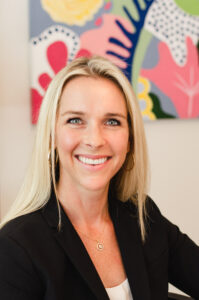
Elizabeth Dixon is an engaging business leader and keynote speaker with over two decades of experience helping teams thrive and brands stand out.
With 20 years of leadership at Chick-fil-A Support Center and partnerships with renowned brands like Southwest Airlines, The Ritz-Carlton, Zappos, and Wegmans, she brings deep expertise in purpose-driven culture, customer experience, and leadership development.
Elizabeth developed and served as CEO of the Trilith Foundation, a nonprofit focused on inspiring human flourishing. She’s the author of The Power of Customer Experience and The Strength of Purpose, a Fellow at Baylor University, and the founder of two companies: Slumber Sleepwear and Possibility Co.
Whether speaking on stages or coaching leadership teams, she helps people unlock what’s possible in life and work.
Her greatest joy is her family – being wife to her best friend, John, and mom to David and Ansley, and living a life of faith that guides her purpose and passion.