
[David] But it’s time to get over to Alice with the legislative update. I wanna give a shout-out to Kathie Thomas, who texted me. Kathy and I have known each other for many years. Those of you in the industry that have any privilege of knowing Kathie, she is a true professional, knows compliance. A lot of the areas that Alice and I work together on, Kathie and I have worked together on. And she sent over a headline about, that I thought was really interesting about Chopra the former consumer and CFPB director was recently appointed secretary of California’s new Business and Consumer Services Agency. You had a chance to look into this briefly. Alice, let’s start with that story and then get into what else is going on.
[Alice] Sure, Dave. Hi, everybody. Happy… What day is it? It’ll be Tuesday when they’re listening to this, right? Yeah, when they listen, yeah, so July 1st Chopra was appointed to the Business and Consumer Services Agency. It’s a cabinet level state agency in the state of California, and I thought it was interesting what it included. It includes the Department of Financial Protection and Innovation, Department of Consumer Affairs. Many of you are familiar with the Department of Real Estate that you all may get, be getting licensed through. But it was interesting that it also includes Department of Cannabis Control, Department of Alcohol Beverage Control, California Horse Racing Board, and then related appeals and regulatory bodies. So I thought that was an interesting combination. Like- A big jump … who’s in that meeting to go, “Let’s put these together”?
[David] That was pretty, it was interesting. But it’s, what I also find knowing Chopra and his approach some would say he had some pretty big fans here in the mortgage industry for a while because under Chopra we did not have as much enforcement. But but there was still a, very viable entity. So I’m not sure I have all the facts on that right. But kudos to California. I think that’s consistent with the political direction of California to have Chopra in there. But thanks for your commentary on that. What you got for what’s going on legislatively?
[Alice] Two things are open for our listeners to participate in. You heard from the Mortgage Bankers Association about the Federal Housing Finance Agency’s Suspended Counterparty Amendments Proposed Rule. So to comment on that one, you simply need to go in your search engine and Google, as we say that particular sentence from FIFA. And so that one you can submit your comments right from their website, as opposed to going into the Federal Register for most of the other things that we talk about that submit your comments on. So this one I find interesting because the headline is the proposed rule is going to remove the words reputational harm, so that’s great, right? We love that because reputational harm, th- that phrase is a bit ambiguous. So if you picture as a lender FIFA, if you’re selling loans to Fannie, Freddie or the Federal Home Loan Banks, if they had some concerns that something you were doing was causing reputational harm they essentially could come in and suspend you. Of course, there’s a process for that, but that term is something that would be removed. So that’s the helpful side of this, but I keep looking through because I see something that’s being added that is going to expand what I consider to be their reach. So the scope, it looks like in the wording, is to include civil enforcement actions and knowing material breaches of contract. So if you have a civil enforcement action, but you aren’t convicted, does that mean that now FIFA actually has an expanded scope in another area where they would be able to issue a suspension to a lender? So everybody spend time reading the wording. Make sure you understand what that means. This is the type of area where I always say seek legal counsel, because this is a big deal when you’re talking about maintaining my relationship and understanding my contract terms with Fannie, Freddie and the Federal Home Loan Banks. So that’s the heads-up on that one. The other one, I promised last week that I would take a look at this Consumer Financial Protection Bureau’s request for information promoting access to mortgage credit. Now, this had three parts to it, and the one I wanted to talk about today Was there looking for comments on the TRID rule. So for those of you who, if we have consumers listening, TRID, right? What the heck is TRID? So we used to have TILA. We have the Truth in Lending Act, and we had the Real Estate Sub- Settlement Procedures Act. They had separate disclosures. The word TRID essentially is our word in the industry for combining those disclosures. And so that’s the loan estimate that you get with your application and the c- closing disclosure that you get when you actually go in and close the loan. There are a ton of rules of what define if those forms have been given to a consumer in an accurate way and in a timely manner, and all that is on the table for comment And so this is the one, like I said last week, you wanna all get together and put to- as a company, and come up with constructive feedback on how to recommend what to change. I love people who go, “Throw out the whole thing.” And then the, FPD’s responsible for r- replying to every single comment. So yes, your comment will be heard, but I can tell you their response after looking at these things for 40 years will be, “Not possible.” Yeah. We still believe, but I remember, you guys could probably share these stories. I, too, I saw this firsthand. Young kids, and I’m sorry, I don’t mean to stereotype, but this we’d have a whole room full of, young kids in their early 20s who had no idea mortgage had a T in it, are taking loan applications. And you got good faith estimates, back in the day, with no numbers that were any meaning to a consumer, and the estimate costs were way off. Yeah. So there’s lots of history out there for the regulators to go you guys don’t get this right, if we don’t give you some boundaries.” Unfortunately, they’ve got a lot of ammo on us that’s from the past. So we have to be constructive. I do think that there’s a lot of ways to make this easier for consumers coming up to closing if we have to redo numbers. I would love to see that it’s more of a 24-hour waiting period instead of three days for the closing disclosure if I got good loan estimates out there. Perhaps there’s some fees, specific fees that shouldn’t be in the 10% tolerance bucket, and should be- Yeah … in an unlimited tolerance. So I would say take that strategy, go fee based. Take a look at what fees should move and have better tolerances to work with, and be very specific about how we can change those dates to not make a closing so clunky. Most of you out there have loan origination software that’s programmed to this. You probably don’t feel a lot of it if- but you feel it when closings start to go wrong because you had an extra appraisal or a transfer tax that came in that is changing who’s supposed to pay it. So focus on those things, on how to streamline it, not to throw the whole baby out with the bathwater. That’s my two cents, Dave. I’ll pass it back to you.
[David] Good. Good. Good. Good job. That’s really some good advice there, huh? Sage advice from someone who’s been at this for a long time. I’m chuckling to myself about young ones in the, starting out, taking applications and messing up on those. I, 52 years ago, I probably landed in that category
[Alice] Remember good faith estimates? And they’ve just wrote a big zero with a slash mark on it. Yeah. “Oh, here, no, it’s free.” You’re going, “No such thing as a free mortgage.”
[David] Yeah. Bill, you got a smile on your face. It’s cool. You chuckle remember.
[Bill] I heard 50 years ago is that you define the category, not just- Well- a member of the category
[Alice] That’s why we have the law Dave? Is that you? I may have inspired- Our generation screwed it up for everybody now.
[David] I may have inspired the law. That’s true. That may have tru- that’s funny. Very good. Thanks, Alice. Good report. Appreciate it so much. And then also kudos to the continued growth of your former employer, Union Home, Bill Cosgrove- Yeah and continue to look what they’re doing, and doing so well. It’s so good to see them doing well. They’ll be learning from-
[Alice] Yeah, their onboarding process is beyond. Yeah. It is stellar. And that’s really the key. As you said you’re trying to keep the boat growing and, pouring more on the engines, adding engines, adding, features. You’re using the sailing analogy. And another one- I put a motor on a sailboat. Yeah. I just recalled that.
[David] If you wanna be good at something, emulate something that’s being done well by someone who’s doing things really well. And another one that came up this last week was Mortgage U the university or the mentoring program. Your old company was called Mortgage U. I’m going back to way, way back. But they created a mentoring program, and one of the guys I was working, I’m working with, have a relationship with, he said, “My son went through the Union Home program where it is intern program,” is what I’m trying to remember. The intern program. Oh, yeah, that’s amazing. Intern program. It was really well done. He said he learned so much, and he’s going into mortgages as a result of it. Not because his dad’s been in mortgages for years. It’s because of the experience he had at Union Home. Now, on that, I think it’s a great way for us to bring new talent, fresh talent in there. If you’re looking for a new strategy, folks, to bring talent into the industry, into your company, that would be a good program for you to mimic. What, I believe you were instrumental in setting that up, Alice.
[Alice] Oh, I can’t take credit for setting it up. We were definitely that was, a full team over at Union Home and Bill’s brainchild. But we definitely were a key part in helping as the training group of getting them up and running. It’s getting the right people in. And I will tell you, we all, as a company, we would have 80 interns at the time. We planned our workflows throughout the year knowing we were gonna get this valuable resource from May through August. And so you really could help manage the peaks, the summer peak season by having the interns there during the peak season but you were planning all year for this. And so it really is an integral part of the business model.
[David] Yeah. Very good. S- good stuff. I l- love to hear all that you’re doing, and you’re still contributing, Alice, even in your retirement years for buying and being a part of the podcast here. And thank you so much for your contribution.
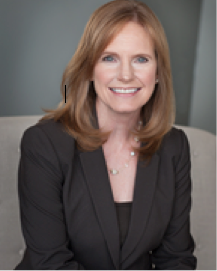
Alice Alvey, Master CMB
She handles development of their World Class Training program designed to support UHM partners and organizational effectiveness.
Prior to UHM, Alice served as Senior Vice President at Indecomm leading the Indecomm-Mortgage U division, Internal QA and Compliance and SaaS technologies. Indecomm acquired Mortgage U in 2013, where Alice was President/Co-founder, providing training and consulting since 1996. Prior to MU she served as SVP of Operations at a national bank overseeing operations for wholesale, retail and correspondent from underwriting through servicing, and compliance.
She has been in the trenches of mortgage lending operations from application through servicing for over 30 years. Her authoring work in training content, policies and procedures and the FHA/VA Practical guides illustrates her ability to bridge regulatory requirements with day-to-day operations.
Alice has been a weekly contributor to the Lykken on Lending show since its beginning in April 2009 and has made her weekly contributions to 450+ episodes!